

It’s hard to imagine New York without shopping malls, department stores, and the entire shopping experience. Yet, there was a time in this bustling city when shopping wasn’t the vibrant and exciting process we know today. The arrival of department stores, with their impressive architecture and multiple floors filled with merchandise, completely transformed how people shopped, turning a routine chore into a new cultural ritual. Among them, Macy’s became the leading center for shopping in the 20th century. Stores like Macy’s weren’t just for selling goods. They helped shape the unique character of the city, becoming a benchmark for innovation and style. Read more at newyork1.one.
The Birth of Macy’s
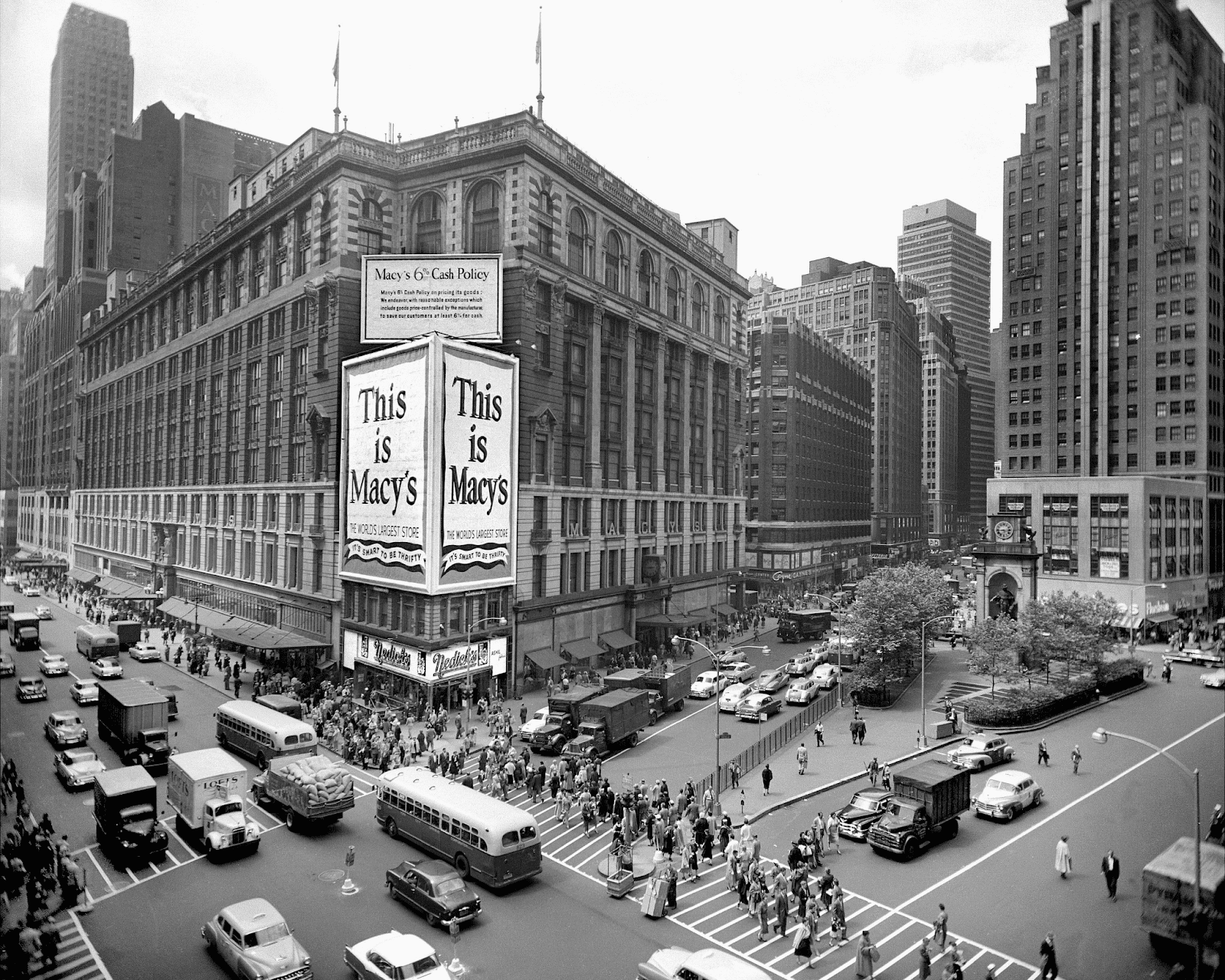
The story of one of America’s largest department store chains began in the 19th century. Historical sources trace it back to Rowland Hussey Macy, who opened four dry goods stores between 1843 and 1855. One of them, the first Macy’s store, was located in downtown Haverhill, Massachusetts, and opened in 1851 to serve local mill workers. However, all these ventures were unsuccessful. Learning from his mistakes, Macy moved to New York in 1858 to start a new business from scratch.
The new store, named “R.H. Macy & Co.,” was located on Sixth Avenue between 13th and 14th Streets. The location was significantly further north than other dry goods stores. On its opening day, the store made $11.08, which is the equivalent of about $390.19 in the 2020s.
Originally, the company’s emblem was a rooster, but it was replaced by a red star by 1862.
Stages of Store Development
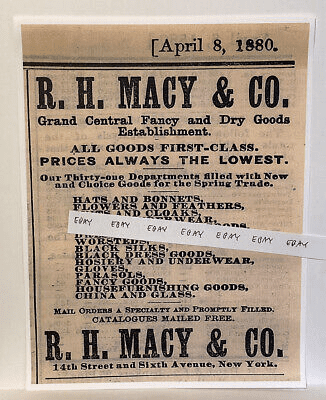
Macy’s successful business allowed it to expand significantly. It took over neighboring buildings and added new departments. To attract customers, the store actively used various marketing tactics: it hosted holiday events with Santa Claus, created themed displays, and decorated windows with bright lights. Macy’s also offered its customers a money-back guarantee, though until the 1950s, only cash was accepted. Additionally, the store began manufacturing its own men’s and women’s clothing, which was made in a factory right on the premises.
In 1875, Macy’s brought on two new partners: Robert M. Valentine, the founder’s nephew, and Abiel T. La Forge from Wisconsin, who was married to a family cousin. Unfortunately, tragedy struck all the partners. The founder, Macy, died in 1877 from kidney disease, then known as Bright’s disease. Soon after, La Forge died in 1878, followed by Valentine in 1879.
After these losses, the company’s management remained in the Macy family’s hands until 1895, when brothers Isidor and Nathan Straus bought the business. They renamed it “R.H. Macy & Co.” It’s worth noting that before the purchase, the brothers had already been working with Macy’s, holding a license to sell china and other goods in the store.
A New Era for Macy’s
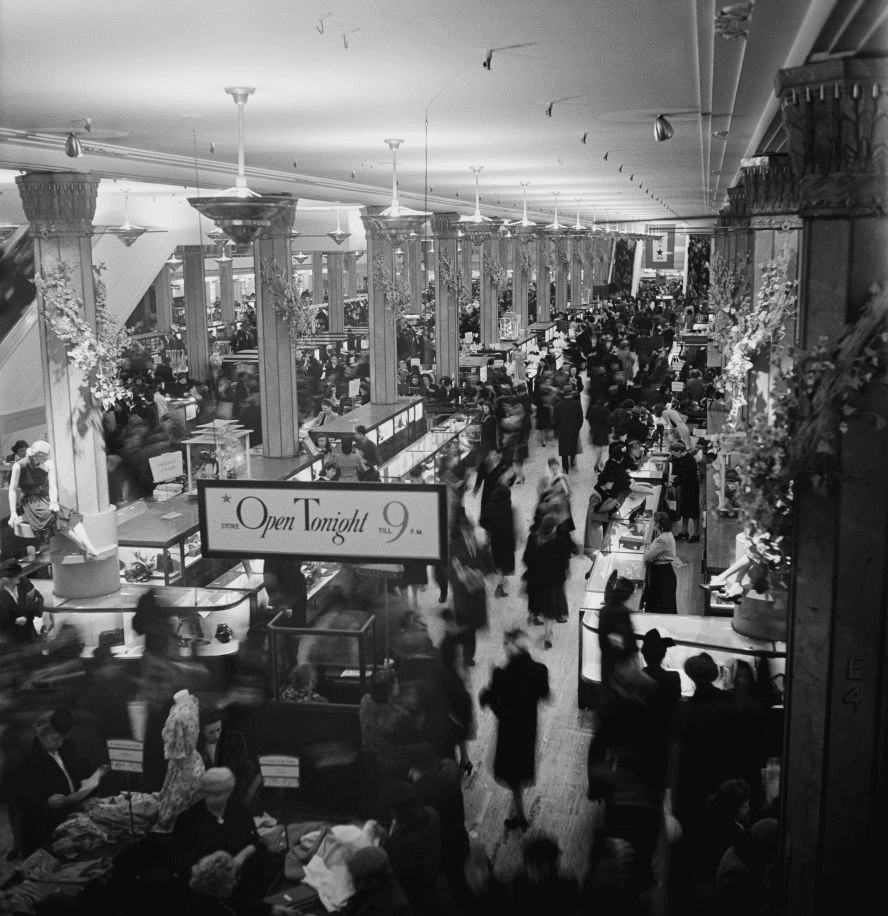
In 1902, the Macy’s flagship store moved to the Herald Square area, located at the intersection of 34th Street and Broadway. This new location was significantly north of other major dry goods stores, so for the convenience of shoppers, a steam-powered wagon ran from 14th Street to 34th Street. Initially, the store occupied a single building, but it later expanded to cover almost the entire block between Seventh Avenue to the west, Broadway to the east, 34th Street to the south, and 35th Street to the north. The only exceptions were two pre-existing buildings: one at the corner of 35th Street and Seventh Avenue, and the other at the intersection of 34th Street and Broadway. The latter was purchased by Robert H. Smith in 1900 for $375,000 with the goal of preventing Macy’s from becoming the world’s largest store. It’s believed that Smith was acting on behalf of Siegel-Cooper, whose owners had built a large department store on Sixth Avenue in 1896. However, Macy’s simply built their store around the existing building.
A tragic historical fact for Macy’s was the Titanic disaster in 1912, which resulted in the death of one of its owners, Isidor Straus, along with his wife, Ida. He was 67 years old.
The original Broadway store was designed by the architectural firm De Lemos & Cordes and built between 1901 and 1902 by the Fuller Company. Its facade is in the Palladian style, but the building was renovated several times. New additions were built to the west in 1924 and 1928, and a building was constructed on Seventh Avenue in 1931. All of these additions were designed by architect Robert D. Kohn in the Art Deco style.
In 1978, the building was listed on the National Register of Historic Places as a National Historic Landmark.
The 20th Century and Today
The 20th century was a period of rapid growth for Macy’s. In 1941, it opened its first branch outside the main store on 34th Street in the Parkchester neighborhood of the Bronx. The company continued to expand its network by acquiring local department stores across the country. These acquisitions included Lasalle & Koch, Davison-Paxon-Stokes, L. Bamberger & Co., O’Connor Moffat & Company, John Taylor Dry Goods Co., and others. All of them were renamed Macy’s, creating one large national department store chain.
In 1965, Macy’s opened a large branch in the Elmhurst area of Queens. In 1983, Macy’s began to expand beyond the New York metropolitan area, opening a store in the Aventura Mall in Aventura. Soon after, new stores opened in Plantation, Houston, New Orleans, and Dallas. The 20th century was a very turbulent period for the department store. It went through numerous mergers, reorganizations, and even bankruptcy. But, despite all the challenges, Macy’s remains one of the most popular department store chains not only in New York but across the country.
In the 21st century, Macy’s operates 508 stores throughout the United States. The company’s flagship store is in Herald Square in Manhattan, New York. The company employs 94,000 people, and its annual revenue as of January 2023 was 25.3 billion dollars.
The Macy’s Parade
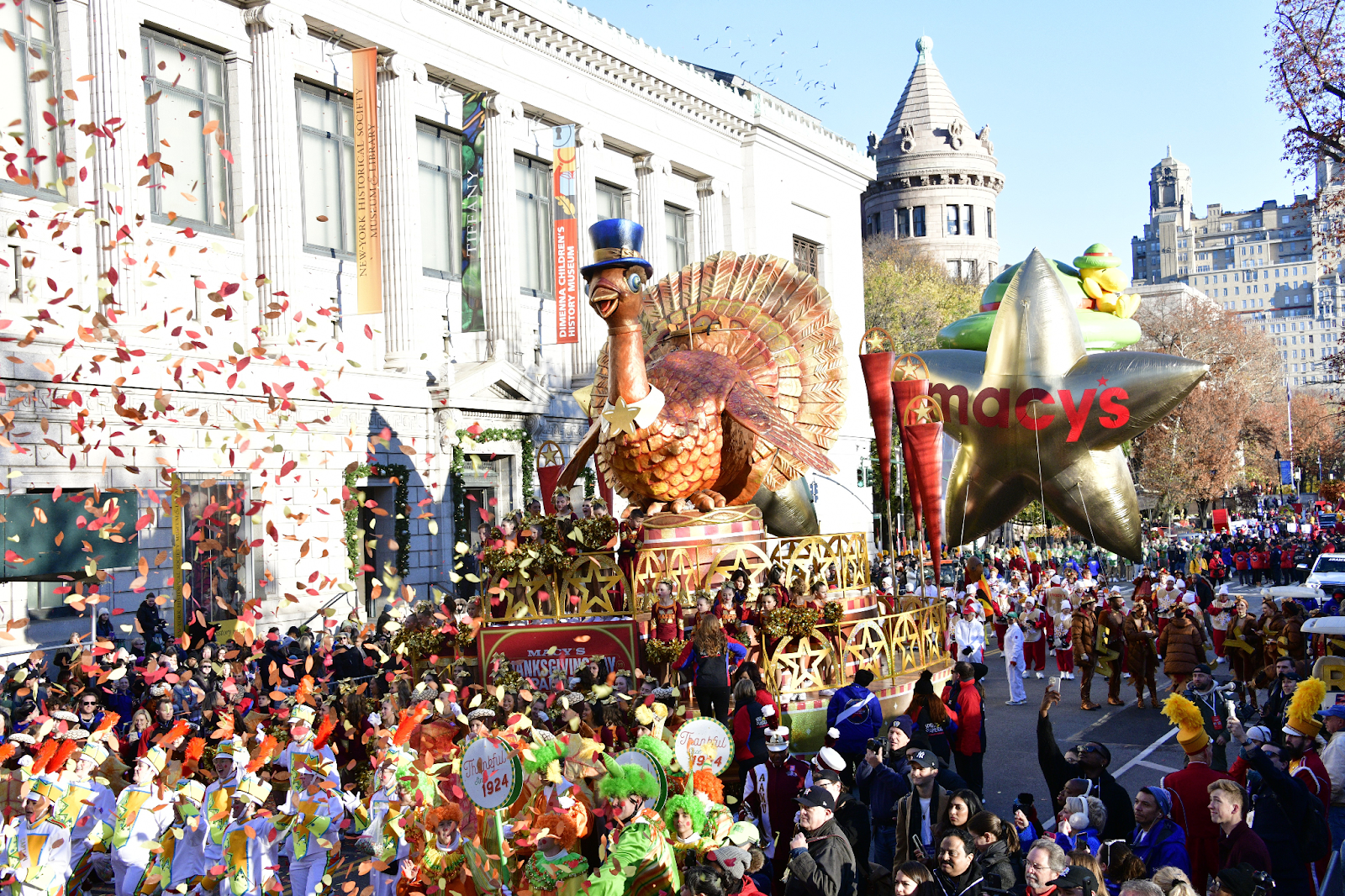
Since 1924, Macy’s has organized an annual Thanksgiving Day Parade in New York and has been the sponsor of the city’s July 4th fireworks display since 1976. For many New Yorkers, the parade is one of the most beloved and anticipated city events of the year. The Macy’s Herald Square store is considered one of the largest department stores in the world. It occupies almost an entire block and has 1.1 million square feet (100,000 m²) of retail space, as well as office and warehouse space. The value of the Herald Square building alone is estimated at $3 billion.
It’s also worth noting that in 2021, plans were announced to open more than 400 Toys “R” Us stores inside Macy’s, beginning in 2022.