

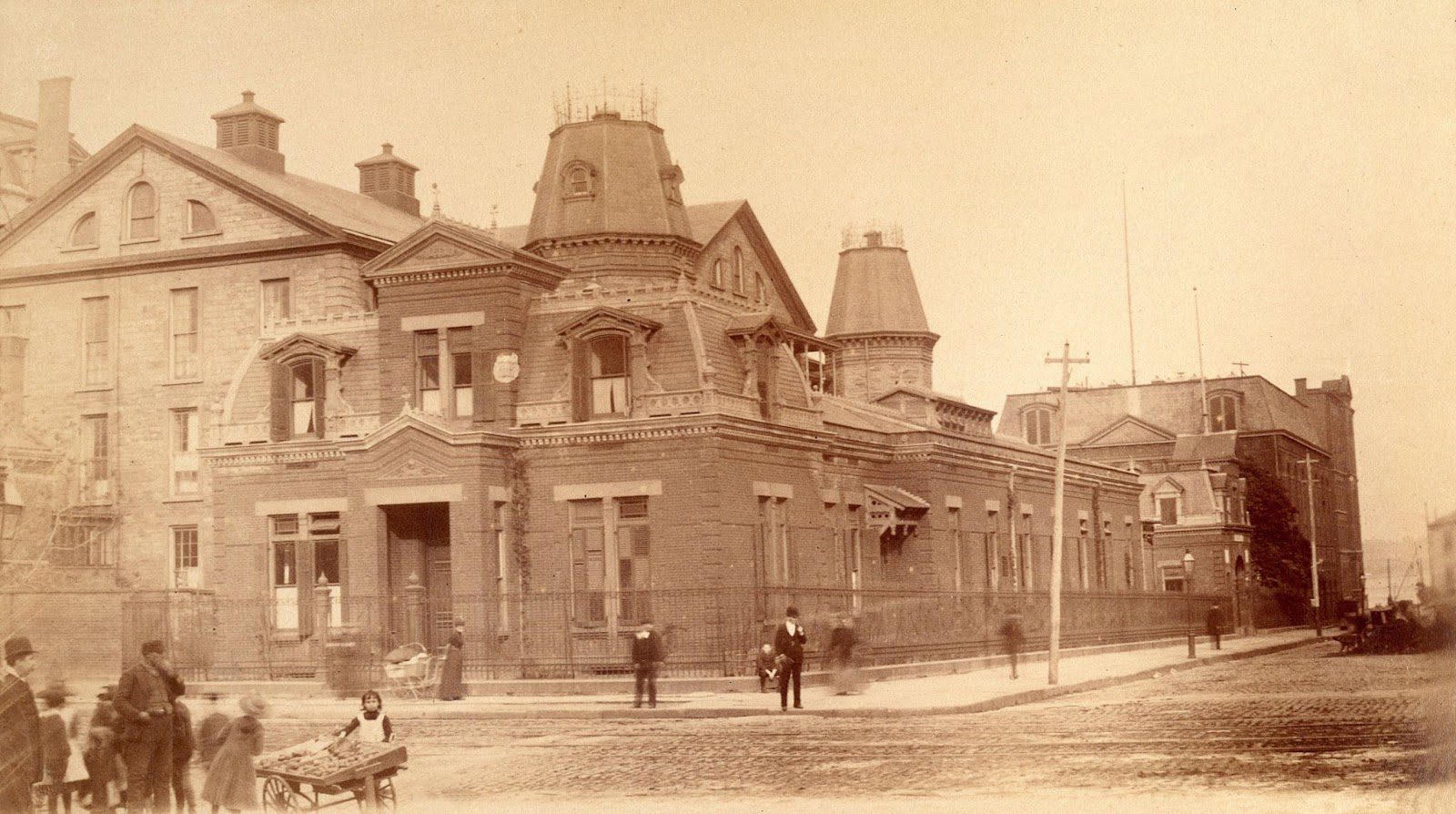
Bellevue Hospital in New York City is one of the oldest medical facilities in the United States of America. It was established in 1736 as a medical institution and a shelter for the poor, old and disabled. During the 18th and early 19th centuries, a hospital was a slightly different kind of medical institution. Poor, sick and miserable people came here to die. As a result, only the wealthy could be treated at that time, when doctors came to the patient and not the other way around.
Everything began to change in the middle of the 19th century, when hospitals began to modernize, improving medical care and patient stay. In its nearly 300-year history, Bellevue Hospital has seen many changes, and many notable achievements in the medical life of New York have taken place here. Its history vividly depicts the development of all medicine in the United States.
Since its inception, this medical institution has served a wide range of patients, which is why the hospital has become a natural laboratory for the country’s first clinical research. Tens of thousands of Civil War soldiers were treated here. This facility saw the establishment of the first civilian ambulance team and the first nursing school for women. In addition, the first horse-drawn mobile treatment centers were established here in 1869. Bellevue even had the first city morgue in New York. Here, in 1799, the first maternity ward was established. Despite these tremendous accomplishments, Bellevue is probably best recognized for its psychiatric ward, which was one of the first to operate in the country.
Let’s take a deeper look at some of the most significant events in the impressive history of the oldest Bellevue Hospital. Continue reading at newyork1.one.
A nursing school at Bellevue
Ever since its establishment, Bellevue Hospital has been actively contributing to the development of the American healthcare system. Teachers from New York’s oldest university conducted clinical research here, and in 1849, established a laboratory for surgical training. They later established the first medical college in New York, which was housed at Bellevue Hospital.
By the beginning of 1873, the Training School for Nurses was opened at the hospital. This was the first school in the United States of America to be led by Florence Nightingale’s nursing principles. These regulations demanded strict compliance with sanitation and hygiene rules in addition to the inclusion of a staff of licensed nurses. Plans for the school were made a little while back when a group of women under the direction of Louisa Lee Schuyler brought up an important topic regarding the poor state of public hospitals in New York City and its neighboring districts. This initiative was aimed at improving hospital care by providing nurses with training.
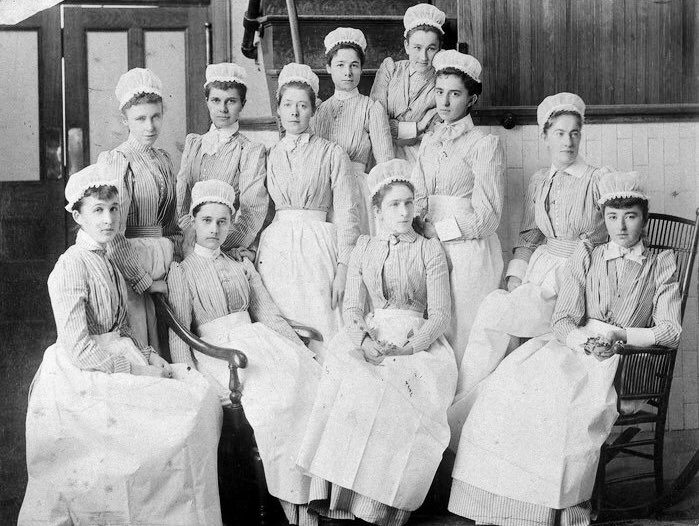
Initially, training comprised learning the fundamentals of sanitation, neatness and patient comfort. In the late 1870s, Bellevue doctors began giving lectures on anatomy, physiology and hygiene.
Furthermore, in the early 1880s, the jewelry company Tiffany & Co. created a special Bellevue School hairpin for nursing graduates. It represented the special role of nurses in caring for the sick and needy.
In the early years of the school’s existence, there was no established uniform, but by the 1880s, blue and white striped fabric was adopted as a uniform, and the style remained at the discretion of each student. At the beginning of the 20th century, the uniform style was standardized, and the Bellevue branded cap became an established feature of the outfit.
Gradually, the process of reorganization began, affecting both the educational process and hospital work. The university implemented multiple levels of training for first-year, junior and senior students. Furthermore, the hospital established an eight-hour workday. Before that moment, the medical staff was working hard for twelve hours a day.
The Mills Training School at Bellevue Hospital
Men also stood out vividly among the nursing staff in healthcare institutions, and they perfectly handled their professional duties. Only toward the end of the 20th century did the nursing profession in America become mostly feminine.
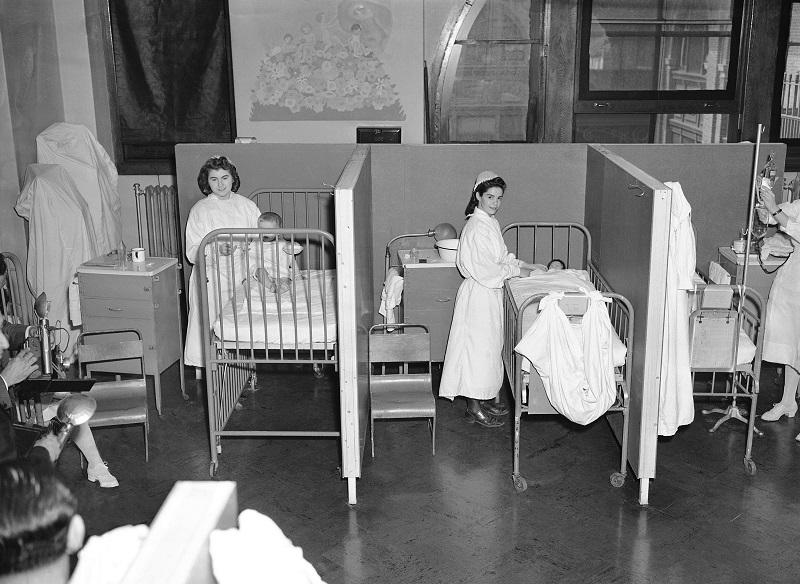
American banker and well-known philanthropist Darius Ogden Mills, decided to encourage nursing in the district, emphasizing the importance of both men’s and women’s employment. He provided funds for the establishment of the Mills Training School at Bellevue Hospital in New York City. Later, this institution joined with the well-known Bellevue Training School for Nurses, and both schools successfully functioned together until their eventual closure in 1969.
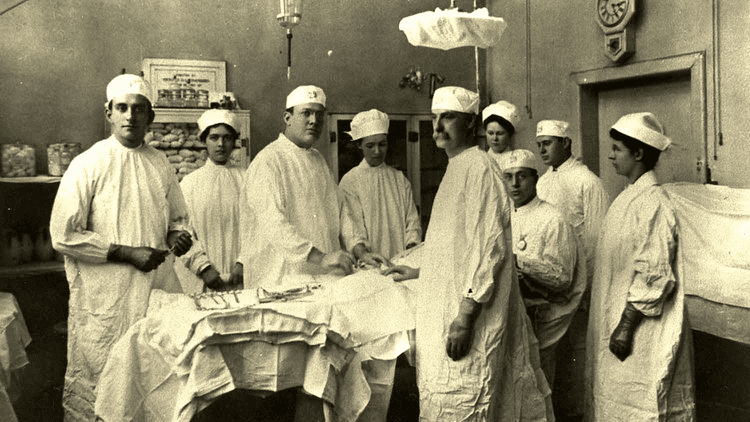
There were several more institutions operating around the country, especially in psychiatric hospitals, that taught the fundamentals of nursing exclusively to men. But as time went on, more and more male doctors were not admitted to hospitals to work as nurses. At the end of the 19th century, most American nursing schools practically did not admit male students for training, which resulted in the fact that almost all nurses today are women.
One of the first hospital ambulance services in the country
Built on the basis of the hospital, Bellevue Hospital ran the second ambulance service in the country. Prior to the inception of this service, citizens had to travel to the hospital on their own, which sometimes cost them their lives.
The idea for an ambulance service came from Civil War surgeon and army doctor Edward Dalton. He created a vehicle with a roof and shock absorbers that could quickly and safely transport the wounded. The New York Hospital Board decided to recruit Edward Dalton to create a civilian ambulance service. In June 1869, the Board approved five horse-drawn ambulances. A compartment beneath the driver’s seat held a quart flask of cognac, two harnesses, half a dozen bandages, half a dozen small sponges, pieces of old blankets for lining, a straitjacket and handcuffs. In addition, the ambulance surgeon had a black bag in which he kept syringes for subcutaneous injections, tracheotomy tubes, catheters and drugs, including morphine.
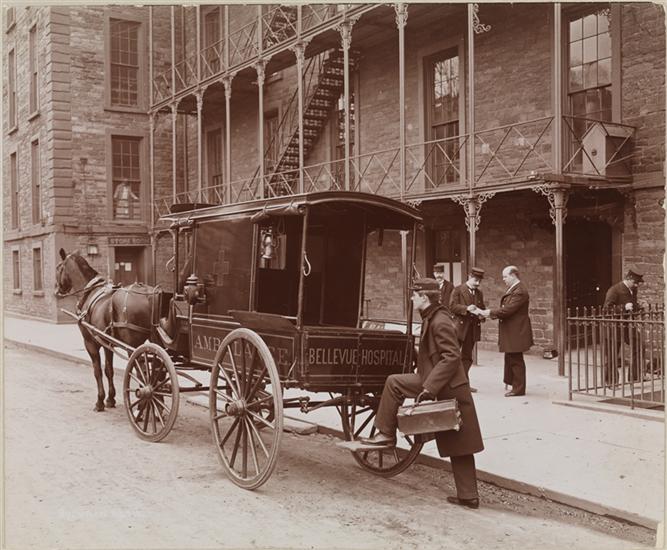
Such an emergency service quickly gained popularity in New York City, and by early 1891, Bellevue Hospital had received over 3,000 calls. As a result, among other medical facilities in the rapidly developing city, the hospital became the most popular in terms of the number of requests.
AIDS Center, established on the basis of the Hospital
In the 1980s, Bellevue Hospital became a major participant in the battle against AIDS. In 1981, doctors in Bellevue reported one of the first three cases of HIV/AIDS, which was then known as unexplained immunodeficiency. The hospital’s medical staff worked hard over the next few years to diagnose the condition and discover the initial approaches and treatments. A few years later, Bellevue established the country’s first HIV nutrition program, which was based at the hospital. There was also a department that provided long-term medical treatment to AIDS patients, including children.
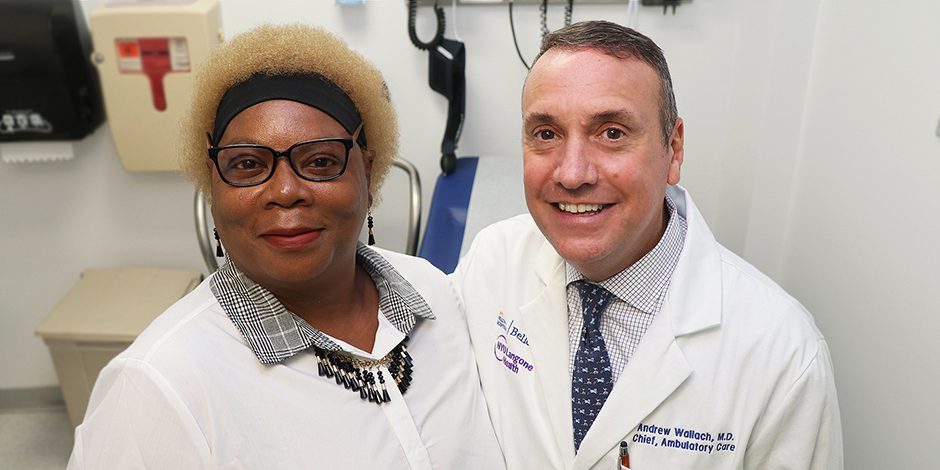
For a long time, the Bellevue Hospital medical team was actively involved in different clinical trials that investigated the use of antiretroviral drugs in HIV-infected children and infants. Additionally, doctors studied the use of combination drug therapy for pregnant women.
As time passes, there are more and more patients in the halls of Bellevue Hospital, and doctors and nurses continue to work tirelessly, study and improve the level of medical services provided. After all, one of America’s most progressive and well-known hospitals retains a long tradition of providing first-rate care to all who require it. The only thing that hasn’t changed is the principles that continue to drive the hospital’s medical staff – responsiveness, compassion, responsibility, integrity and selflessness.