

Pratt Institute is a prestigious private university in New York with its main campus located in Brooklyn. It grew from a school for the working class into an internationally recognized center for art, design, and architecture, retaining its founder’s core principle: education must serve real life and society. Read on newyork1.one for more about the history and unique features of this New York institution.
A Oil Magnate’s Dream Becomes an Educational Revolution
The Institute appeared in Brooklyn at the end of the 19th century thanks to Charles Pratt—an industrialist, oil magnate, and one of the wealthiest residents of the borough. Having been unable to attain a higher education himself, Charles Pratt sought to give that chance to others—primarily the working class. He believed that knowledge and practical skills could change lives. In the mid-1880s, Pratt purchased land near his home in Clinton Hill, and in 1887, Pratt Institute opened its doors to the first 12 students. Tuition was affordable, and crucially, the Institute accepted everyone regardless of gender, race, or social background from the very start, which was revolutionary for its time.
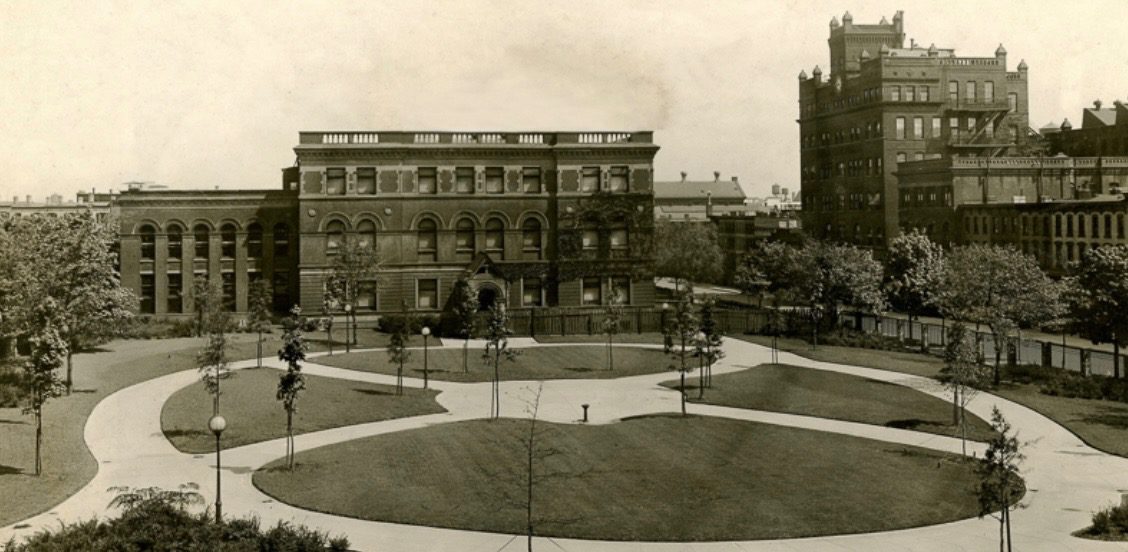
Pratt’s educational philosophy combined technical skills with humanitarian thinking. Drawing (manual, mechanical, architectural) became the common language for all programs. Students mastered engineering, mechanics, design, architecture, dressmaking, and furniture making, while simultaneously studying history, literature, physics, and mathematics to better understand the world they would operate in.
The Institute grew rapidly; within a few years, the number of students reached several thousand. By the end of the 19th century, Pratt was considered one of the most important educational initiatives in the U.S., and its model even inspired Andrew Carnegie. The founder’s motto—”Be true to your work, and your work will be true to you”—became a moral guide for generations of students.
After Charles Pratt’s death, the Institute was led by his sons, who transformed it into a large educational complex featuring a library and schools of art and engineering.
In the 20th century, Pratt Institute actively responded to the challenges of the time. During the World Wars, it trained engineers for the military, participated in aviation technology development, and welcomed thousands of veterans after the war. Eventually, Pratt evolved from a technical school into a full-fledged college with bachelor’s and master’s programs, expanding architecture, design, and art.
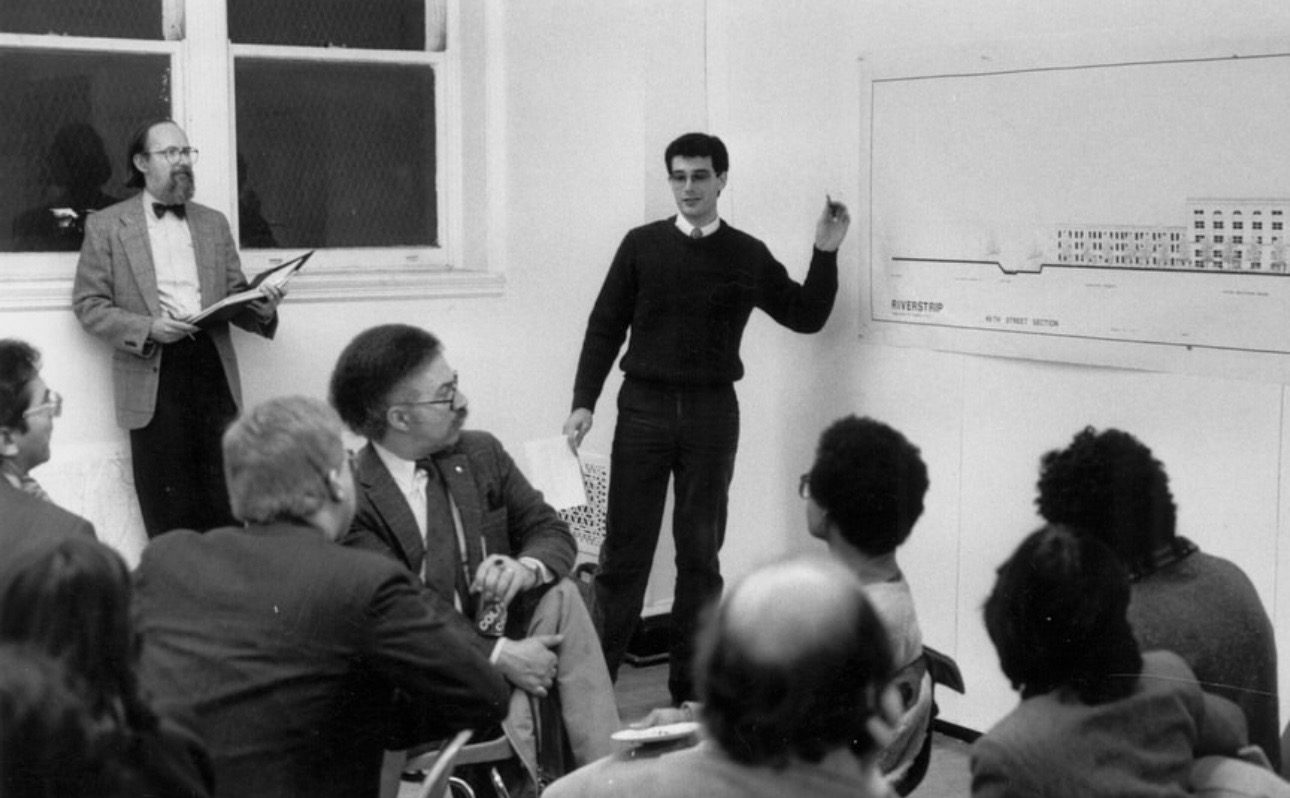
In the late 20th and early 21st centuries, Pratt Institute experienced a revitalization: it updated its campus, created the largest modern sculpture park in New York, expanded partnerships, and increased its student body.
Learning Among Sculptures and Gardens
Pratt Institute is a multi-layered educational ecosystem that blends academic depth, professional training, and a unique urban setting. The academic structure is based on the School of:
- Architecture;
- Art;
- Design;
- Liberal Arts and Sciences;
- Information;
- Continuing and Professional Studies.
In the past, the Institute also included a School of Engineering and a School of Domestic Art and Sciences, which played an important role in shaping its educational mission.
Pratt actively develops interdisciplinary formats. Notably, a dual-degree program combining Law and City and Regional Planning is run jointly with Brooklyn Law School. The Institute also holds a full range of accreditations, from general education to professional accreditation in architecture, interior design, library science, art therapy, and art education.
The heart of Pratt Institute is its main campus in Clinton Hill—a 25-acre space. It feels more like a park than a traditional university: green avenues, gardens, courtyards, and sculptures sharply contrast with the dense urban development of Brooklyn.
A particular point of pride for Pratt is the Contemporary Sculpture Park, founded in 1999. Over forty works by renowned artists are displayed outdoors among the lawns and gardens, transforming the campus into the largest open-air museum of modern sculpture in New York City.
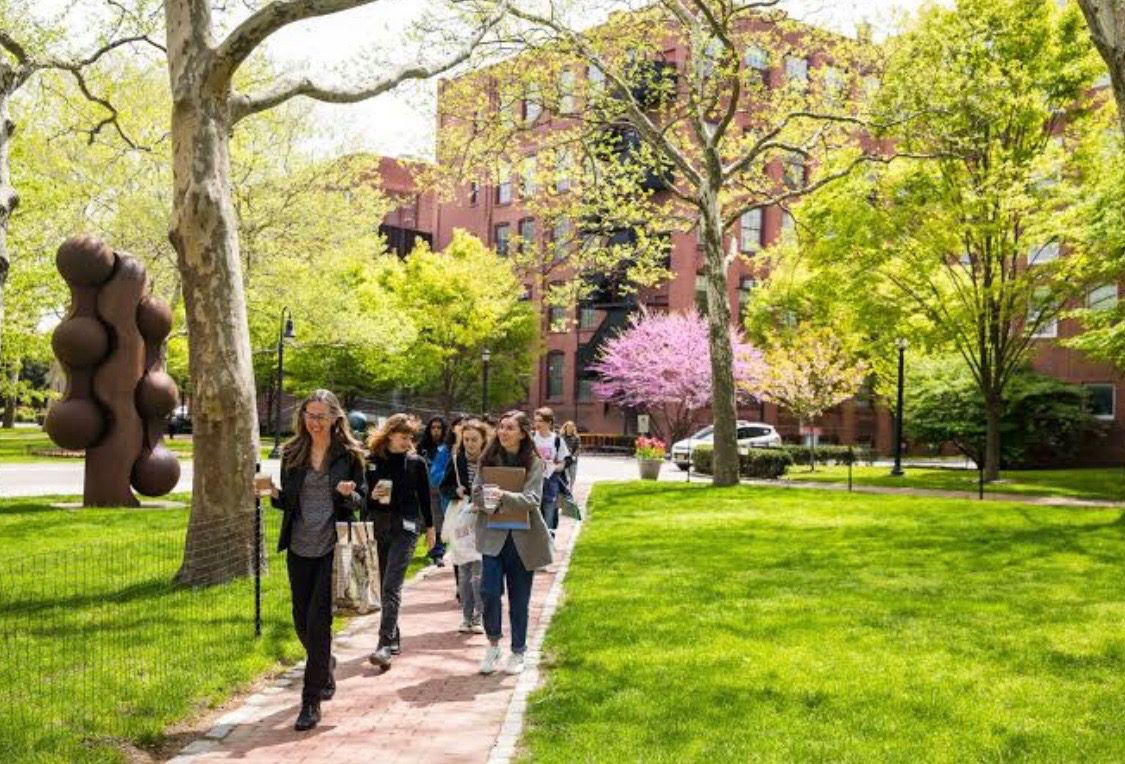
The architectural identity of the Institute has been formed over more than a century. Romanesque Revival, Victorian, and Neoclassical buildings from the late 19th and early 20th centuries coexist here with later modernist structures. Due to this cohesive yet diverse architectural history, Pratt has been recognized as one of the most architecturally significant university campuses in the U.S.
In addition to Brooklyn, Pratt also has a presence in Manhattan, on 14th Street. It is here that the Institute’s connection to the professional world of New York design, media, and art is particularly palpable.
Pratt Institute emerges not just as an educational institution but as a living urban organism—with its own architecture, history, cultural space, and a community where education, creativity, and the city are tightly interwoven.
Beyond the Classrooms: Life on the Student Campus
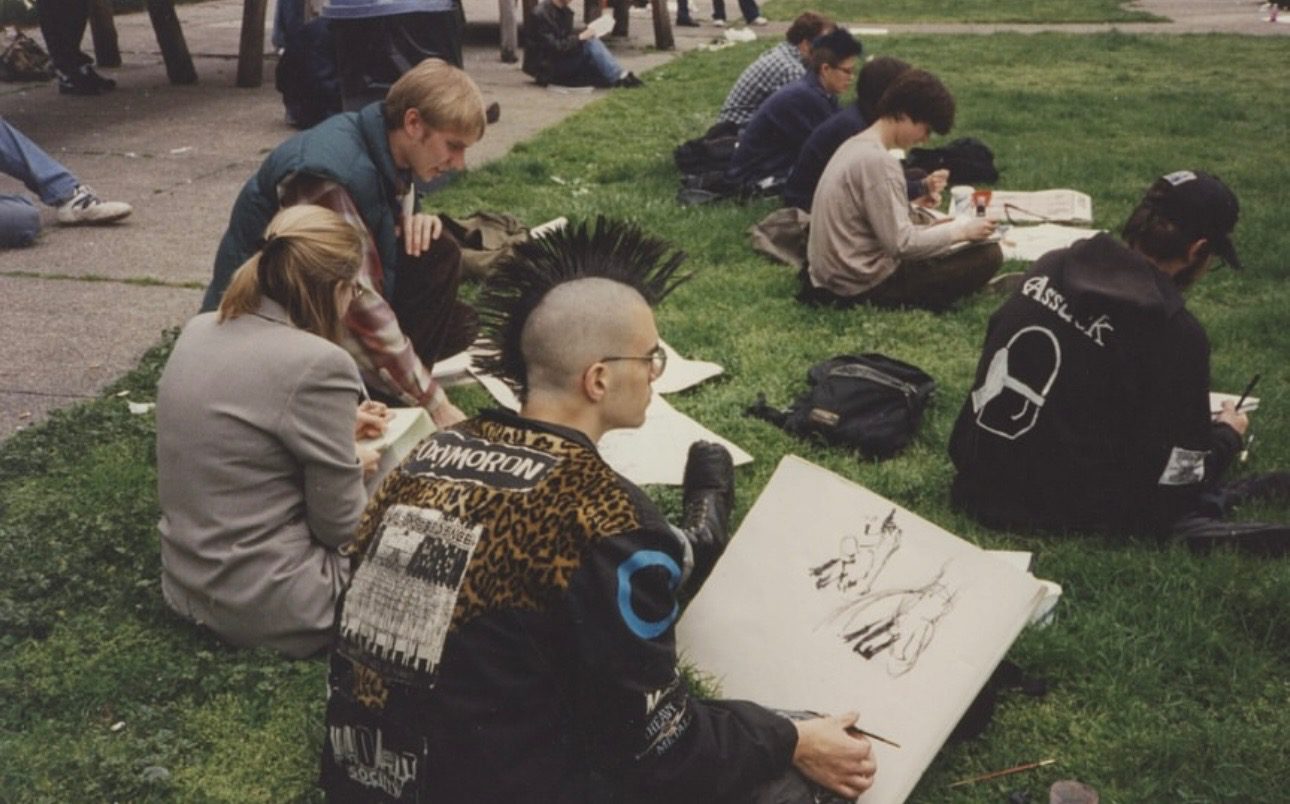
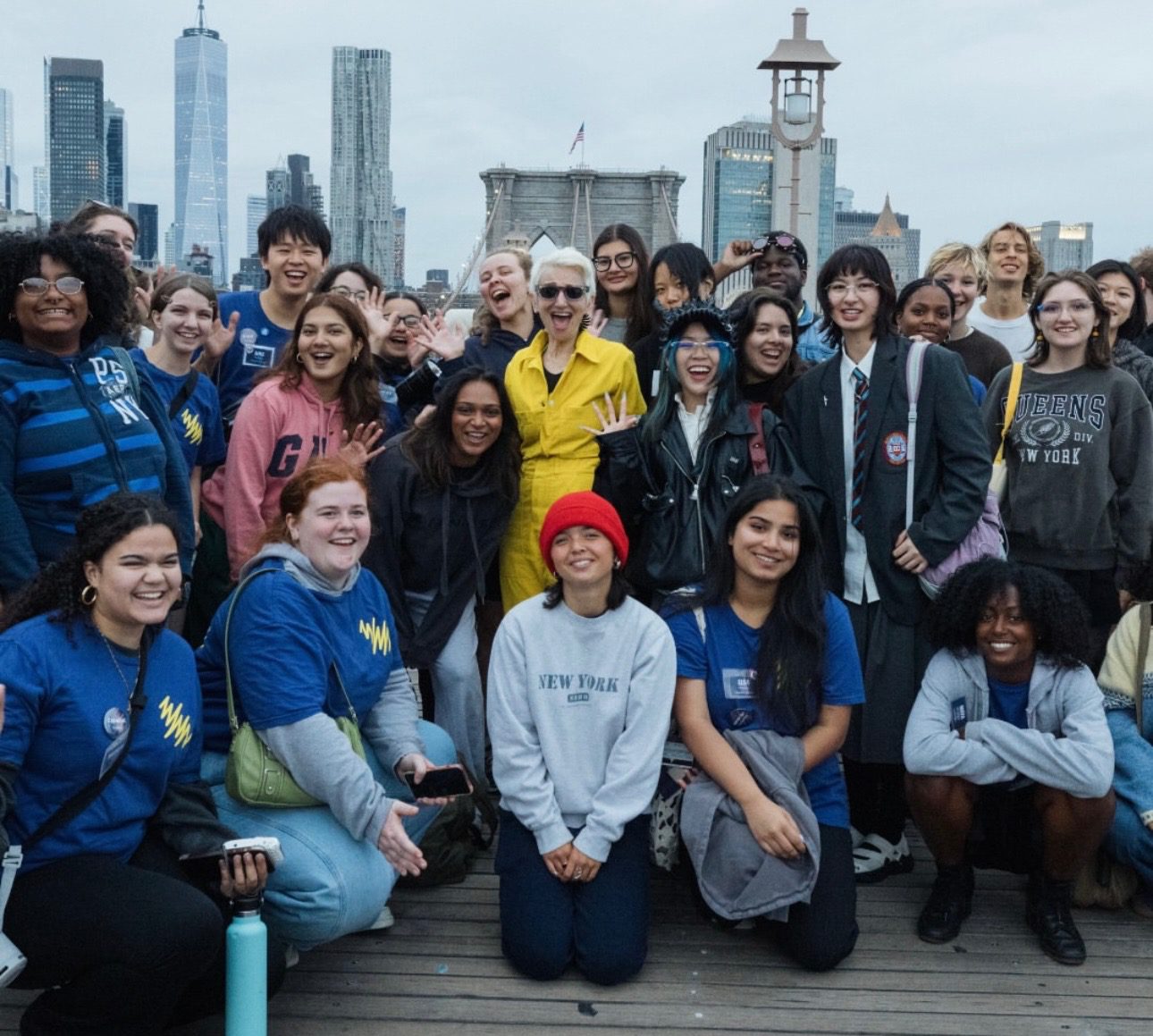
Student life at Pratt Institute is a dynamic space where learning naturally extends into culture, sports, and social action. There are over 120 student clubs here—ranging from arts communities to scientific and activist initiatives. The Pratt Photo League, Latinx Student Alliance, Botanical Society, or Aura Dance Crew don’t just gather; they create events, exhibitions, and open platforms for dialogue, forming a vibrant cultural ecosystem on campus.
An important part of this ecosystem is the student media. The Prattler magazine has been published since 1940, alongside the comic book publication Static Fish, the literary and art magazine Ubiquitous, and the yearbook Prattonia. The literary dimension is complemented by the online magazine The Felt, associated with the MFA Writing program.
Pratt Radio also has its legend—a station born in the 1980s, which disappeared after FCC intervention and was revived in 2001 as a legal internet radio station.
Pratt’s sports life has also gained new momentum. Since September 1, 2022, the Institute has been a full member of NCAA Division III, and the Cannoneers team joined the Atlantic East Conference for the 2024–2025 academic year, becoming the only New York participant in the league. The center of athletic activity is the Activity Resource Center (ARC)—a multi-functional complex with courts, fitness areas, studios, and open spaces for events.
Simultaneously, the Institute is involved in broader social initiatives. The Pratt STEAM Lab provides free education annually to over 260 school students, combining STEAM disciplines with college preparation and support for students from historically underrepresented communities.
The professional successes of students organically complement this picture. In November 2025, Pratt’s architecture team reached the finals of the Barbara G. Laurie Student Design Competition (NOMA) for the first time, receiving an honorable mention for a sustainable community development project. One of the participants summarized the experience:
“It was a challenging but rewarding journey. Learning how to build multi-program, intergenerational housing while working with an amazing team. We didn’t want our design to be imposing. It needed to be a place where families would want to live, where people could grow together.”
Pratt Institute is a space where student life extends far beyond the lecture halls: into culture, the city, and real social change.
Pratt Institute’s Academic Reputation: Rankings, Faculty, Strategy
Pratt Institute’s academic reputation is confirmed by consistently high rankings. In the U.S. News & World Report 2025, Pratt’s master’s programs ranked among the leaders in the U.S.:
- 15th place in Fine Arts;
- 11th in Painting and Drawing;
- 29th in Library and Information Studies;
- 10th in Archives and Preservation.
The undergraduate Architecture program has been on Architectural Record’s List of the Top 15 in the U.S.for more than twenty years.
A significant role in forming the Institute’s esteemed status is played by the renowned faculty and artists who have worked or are currently working at Pratt Institute. These include animator and Tom and Jerry co-creator Joseph Barbera, artists Philip Guston, Jacob Lawrence, Mickalene Thomas, architects Philip Johnson and Karen Bausman, art historians Eva Diaz and Sibyl Moholy-Nagy, ceramic designer Eva Zeisel, as well as dozens of photographers, writers, theorists, and practitioners whose work shaped the face of modern art, design, and architecture.
In 2024–2025, the Institute unveiled the Strategic Plan 2025–2030, re-examining its mission, vision, and values. The updated mission is succinctly stated:
“Pratt Institute educates artists and creative professionals who will shape the world we live in.”

The vision sounds ambitious:
“Pratt will be the pace-setter among creative institutions.”
By 2030, Pratt aims to become the benchmark for academic innovation and institutional sustainability, combining diverse programs—from classical art to digital design and international exchanges—with a powerful faculty and cultural partnerships.