

Despite the hectic pace of life in New York, its residents still find time to visit libraries. New Yorkers love reading books and can often be found in the reading rooms of the city’s best libraries. Surprisingly, there are plenty of libraries in New York as well. If you want to see firsthand the unique collection of manuscripts, first printed books, drawings and ancient engravings, then you definitely need to visit the Morgan Library & Museum. This building is an exceptional treasury of culture, art and history. It is a cult landmark of New York, which has a rich history dating back to the early 20th century. Read more at newyork1.one.
This historical institution, also known as the Pierpont Morgan Library, is located in the heart of NY. The unparalleled foundation represents the legacy of Morgan and other benefactors who contributed to assembling this exclusive collection of the rarest books and manuscripts from around the globe. Visitors can explore early printed books, autographed sheet music, papyri and ancient illustrated books. The Morgan Library & Museum has always something to offer for a visitor, from the remarkable set of scarce books and manuscripts to the stunning architectural design.
Indeed, Morgan made a legendary gift to New Yorkers. By visiting here, you will immediately dive into the world of art, literature and culture. In this article, we will tell you a little more about the history of the private library of the famous financier, collector and cultural philanthropist John Pierpont Morgan.
The life of a prosperous tycoon and book fancier Morgan
The name of John Pierpont Morgan is widely known in America. He was a renowned financier and banker who founded J.P. Morgan & Co. The building of railroads and the development of coal and steel businesses were under the control of this determined banker. In addition, Pierpont Morgan was a shipping magnate. However, J.P. Morgan became known worldwide due to his passion for books. He was an avid collector of printed editions, works of art, gems and more. He also actively donated to many cultural institutions, including the Metropolitan Museum of Art, the American Museum of Natural History and Harvard University.
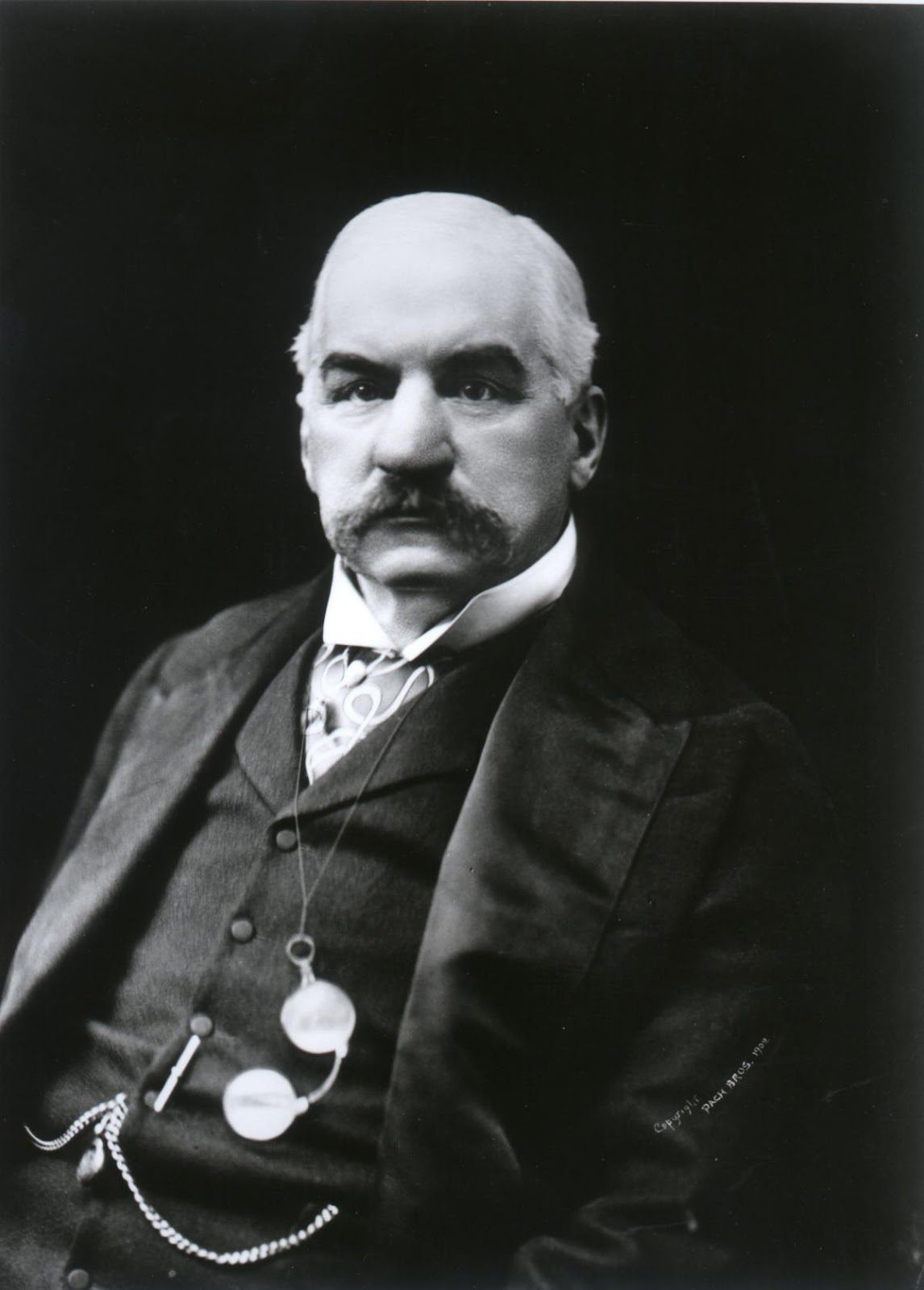
In the last years of his life, Morgan devoted himself to his favorite hobby. He bought up famous historic art pieces, spending nearly a billion dollars on them. The only thing that slightly stopped the financial magnate was the rigid 20% tax on vintage imported works of fine art, which was imposed by the United States government. Morgan focused on rare books and manuscripts, keeping them in his residence in New York because they were exempt from this tax. This largest private collection is one-of-a-kind.
Morgan’s library contained his collection of illuminated literary and historical manuscripts, drawings and engravings by old masters. In 1924, Morgan’s son, J.P. Morgan Jr., made an extraordinary present to the citizens. He opened the library and its collections to scholars and visitors.
The exquisite beauty of the building
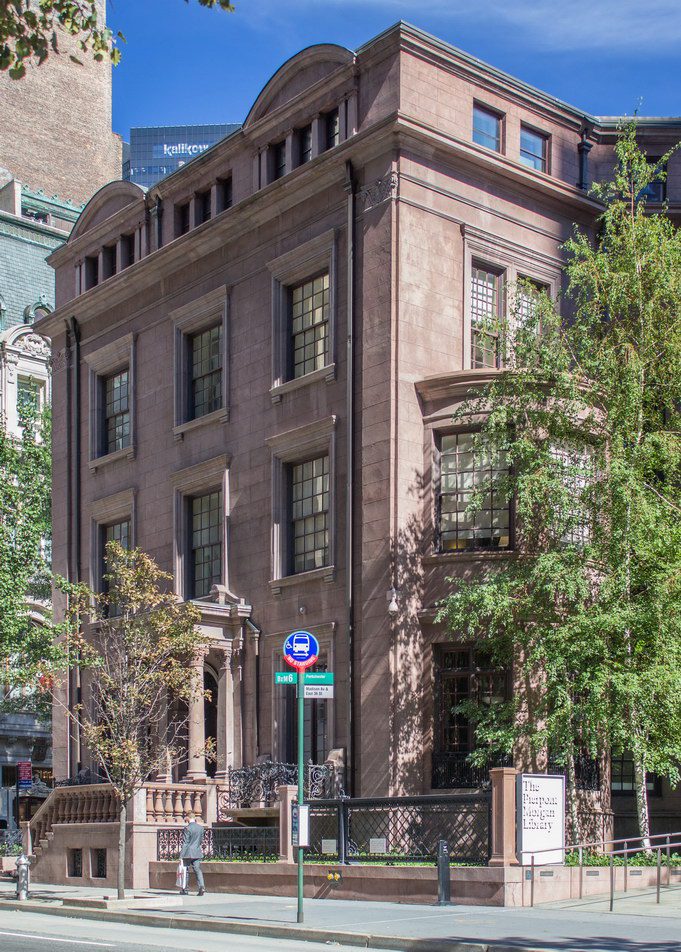
The building for the future library was built next to John Morgan’s New York residence on Madison Avenue and 36th Street in the modern Murray Hill neighborhood. The library was designed by American architect Charles McKim, who envisioned it as a kind of repository for rare pieces. It is a majestic, beautiful, yet cozy building that seems to subtly remind visitors about its really valuable items hidden inside.
The luxurious Italian Renaissance-style institution has three magnificent rooms that reflect the era of American elegance. The exterior beauty and sophistication of the library are emphasized by the beautiful interior design.
At that time, this building was worth 1.2 million dollars.
The facade of the library, the same as Morgan’s residence, preserved its original appearance. However, the building was extended with time so that all guests and regular visitors could feel more comfortable in a larger complex.
Many designers put joint efforts into the exterior decoration. For example, Edward Clark Potter installed two lion sculptures at the entrance, as if they were guarding the entrance to the universe of such exclusive art and literature.
Elegant and opulent decoration of the interior
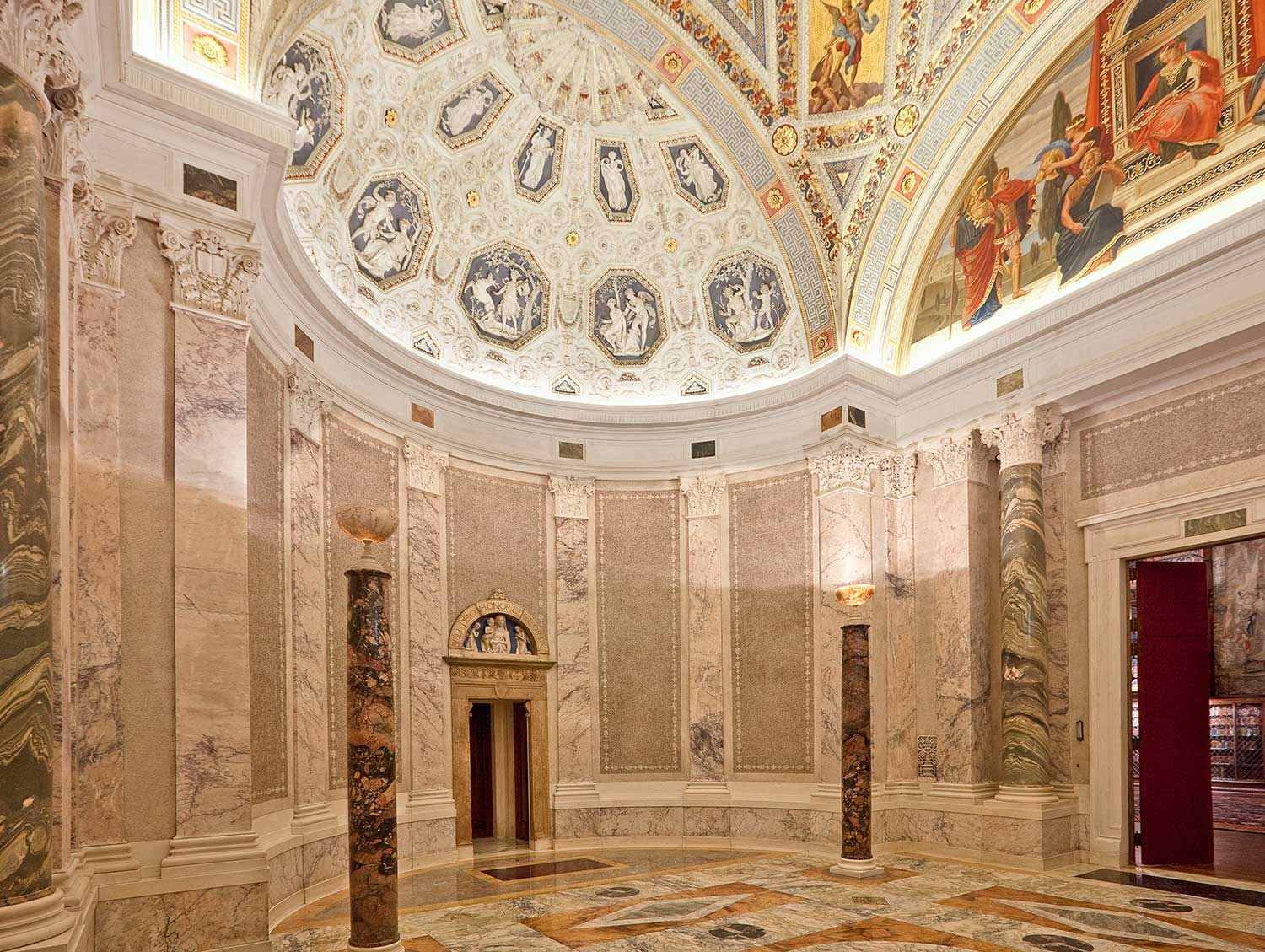
The creative craftsmen skillfully combined simple interior design with beautiful rich colors. They adorned it with expensive marble, abaciscus, columns and beautiful frescoes. With this surrounding luxury, this building proves to be a temple of unique literature and art.
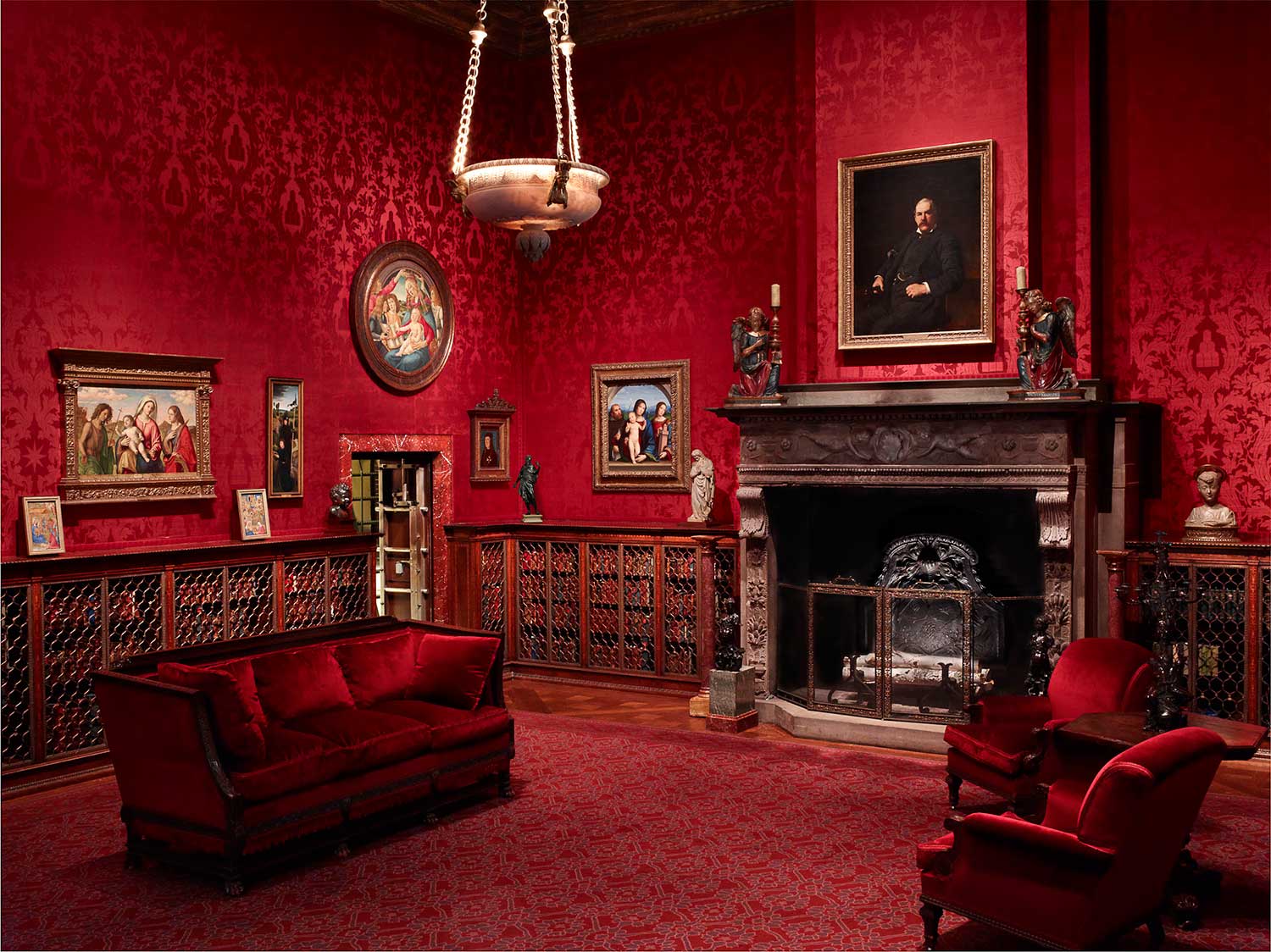
A vaulted ceiling in the interior opens up to the North, West and East rooms. The largest of them is Morgan’s private library, located in the West room. The study has a 30-foot ceiling, which allows bookcases to occupy the entire space. Furniture in the office, which is a West room, represents the Renaissance era. To fully reflect the range of Morgan’s interests and activities as a collector, deep, saturated colors, sculptures and decorative art were meticulously selected for the room.
Covered in red velvet, the walls have a royal hue. Morgan made sure that the desk and couch were designed in an exquisite British style, as his life was often connected to England. The collector adorned his study with personal collections of paintings and sculptures. However, the most mysterious part of the room is the vault, which is used to house Morgan’s rarest and most treasurable manuscripts.
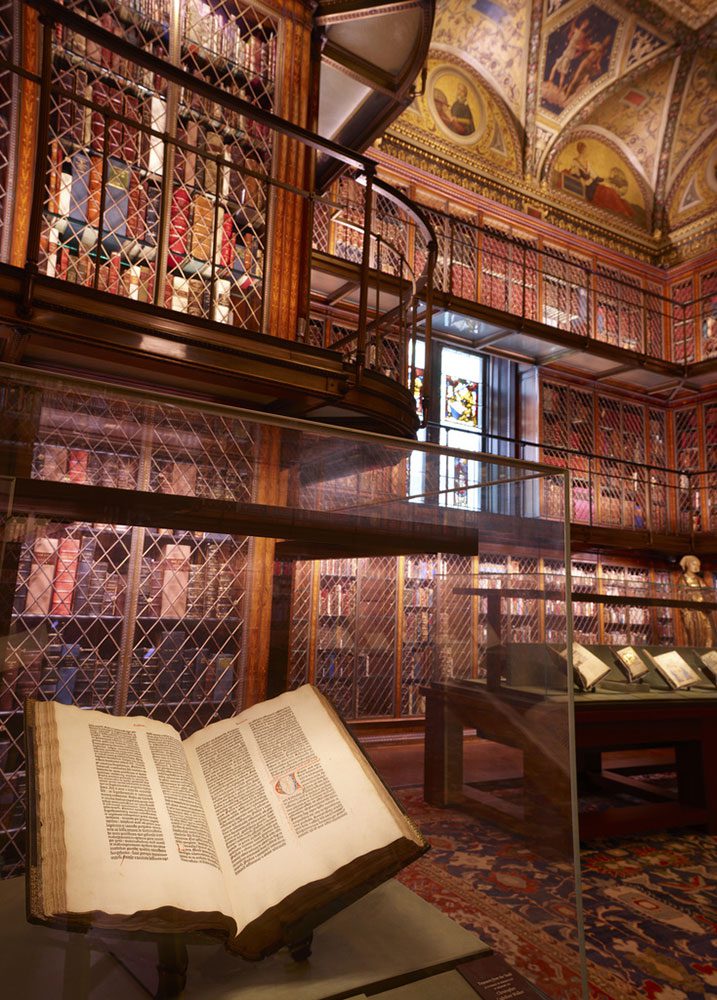
The incredible ceiling in the rotunda is the dramatic centerpiece of the building. Its intricate decoration reproduces characters from classical antiquity and other literary eras of the past, particularly Homer, Dante and Petrarch. Brightly-colored marbled surfaces, mosaic panels and lapis lazuli pillars enhance the richness of color.
The North room, which is better known as the librarian’s office, is slightly different. In 1905, Pierpont Morgan hired a young woman, Belle da Costa Greene, as the librarian. The educated girl had to organize and manage the collection of books and manuscripts. Later, she became the library’s director. Legends say that her ghost arises when visitors ask aloud about a specific book, as if Belle da Costa Greene herself helps to find the needed book.
The room is filled with refined details, worthwhile manuscripts and Roman, Greek and Egyptian sculptures. Additionally, the collection of Mesopotamian artifacts is also kept here.
Next, on their way, visitors discover the East room, which is the pinnacle of American interior design. The geometric structure of the ceiling features intricate frescoes composed of portraits of literary, mythological and influential figures that fascinated the collector. All zodiac signs are also depicted on the ceiling. Morgan was a regular member of Zodiac Club, a prestigious restaurant club at the time.
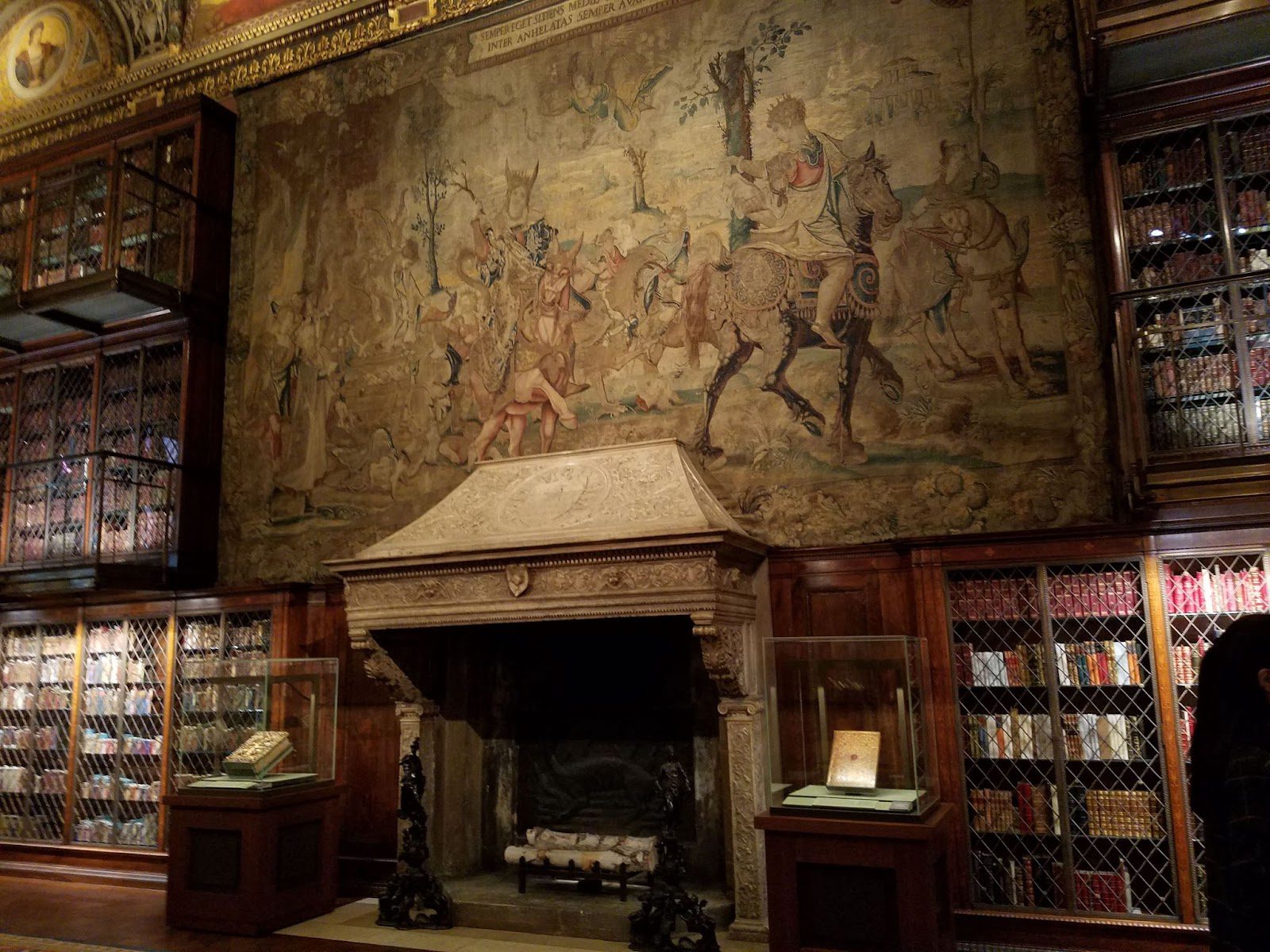
Over the fireplace hangs a precious 16th-century Brussels tapestry. The three-story library, filled with bookshelves made of walnut wood, is a dream for any book lover. 15,000 diverse books of European literature, written in French, Italian and German are stored on the shelves. The Gutenberg Bible, which is presented in three copies, deserves special attention in the museum.
The most important cultural asset in the history of the United States
Eleven years after the passing of the collector and bibliophile Pierpont Morgan, his son J.P. Morgan Jr. realized that the library had become too important to remain inaccessible to other people. In 1924, the library doors were opened to visitors. Thus, it was transformed from private property into a distinguished public institution. In this way, Americans received from Pierpont Morgan the most precious gift, namely his treasury of rare manuscripts, books and objects of art.
Acquiring unique materials, musical manuscripts, ancient children’s books and 20th-century American literature, the library’s fund continued to grow. Furthermore, other rich philanthropists continued to donate the most costly gifts, such as rare book editions.
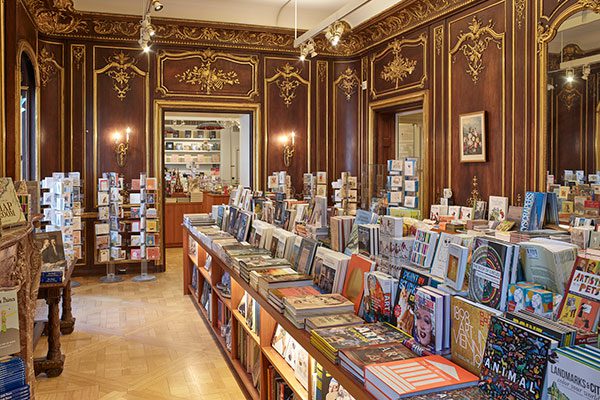
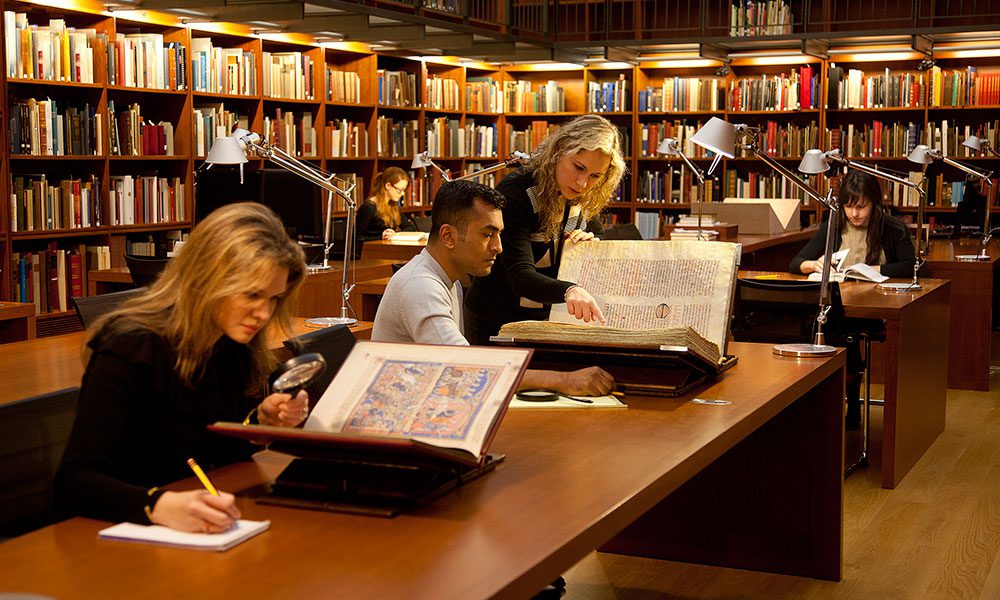
All of this creates a unique and dynamic chronicle of civilization, an incomparable reservoir of ideas and the creative process. The Morgan Library & Museum serves as a special venue for art exhibitions, literature and music, as well as an important modern international research center. Scholars and students from different countries have the exceptional opportunity to access unique pieces from the museum’s numerous collections. Therefore, Pierpont Morgan left behind an original legacy that is a true treasure, a unique landmark and a part of world history.