

Cornell is a place where ideas are born, combining humanities with technological innovation—an entire world of opportunities where every student can find their path. Here, learning is closely intertwined with traditions, unforgettable experiences, and a rich cultural heritage. Read on newyork1.one for the history of this legendary institution, its unique educational features, distinguished alumni, and interesting traditions.
The History of the University’s Founding
In 1865, while America was still recovering from the Civil War, two visionaries—entrepreneur and philanthropist Ezra Cornell and diplomat and politician Andrew Dickson White—set out to create a new kind of university. Not an elitist school for the chosen few, but a place where, in Cornell’s words, “any person can find instruction in any study.” Thus was born Cornell University—a unique institution founded on the principles of freedom, equality, and knowledge for all.
On April 27, 1865, New York State lawmakers approved the creation of the university, and by the fall of 1868, the first campus opened in the hills of Ithaca. Cornell donated his land and funds for the institution’s development, and White became its first president. The inaugural class had 412 students, which was a sensation for a newly established institution.
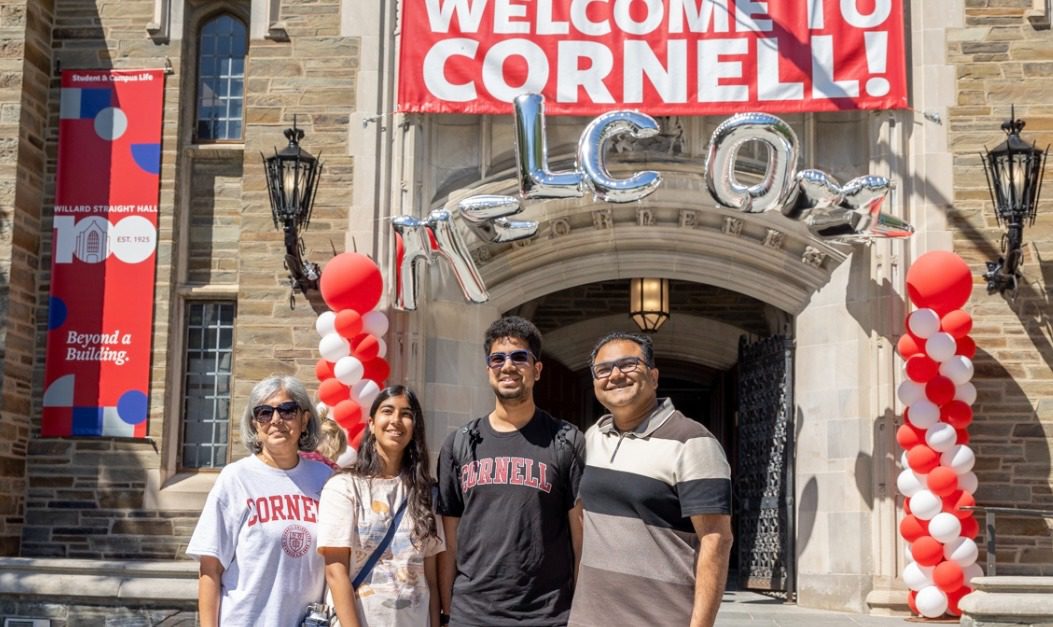
Cornell immediately distinguished itself with bold ideas. Unlike many institutions of its time, students here could choose their own courses, without a rigid curriculum. By 1870, women began enrolling in the university, and thanks to the generous philanthropist Henry Sage, Sage Hall—the first women’s dormitory—was built. In 1874, President White publicly affirmed that Cornell would accept students of any race, even if it drew societal resistance. For the 19th century, this was radical.
In 1893, the journal Physical Review was launched—a future giant of the scientific world that began its journey within Cornell’s walls.
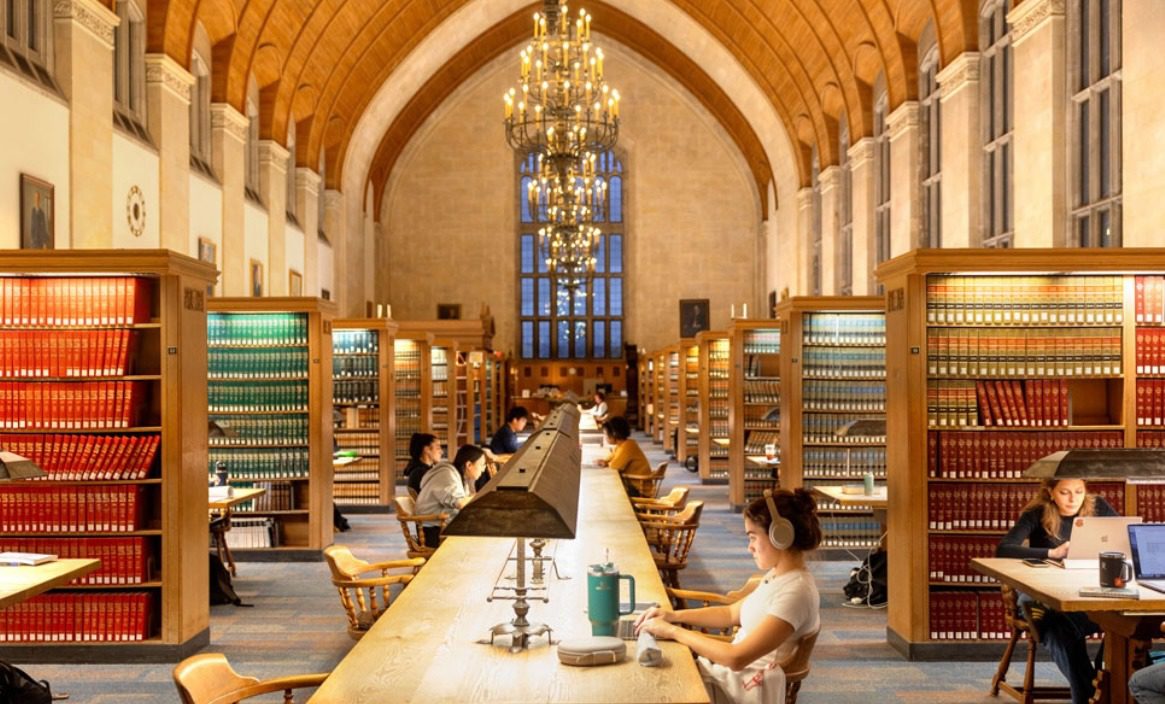
When the Uris Library opened in 1891, and later the magnificent Olin Library in 1961, the university cemented its status as one of the country’s leading research centers. Over the 20th and 21st centuries, Cornell has expanded into a network of colleges, schools, and research institutes worldwide—from New York to Qatar.
More Than Just a University
Cornell University is not just one of the flagships of American education; it is a place where innovation merges with humanism, and science with inspiration.
It is part of the elite Ivy League and consistently ranks high in global surveys, including among the “Top 20 Universities in the World” by QS and Times Higher Education. Approximately 26,000 students, known as Cornellians, study here.
The main campus spans over 900 hectares (2,200 acres) in the heart of Ithaca. It is a true city of science and inspiration, featuring farms, a lake, waterfalls, and gorges. Students often joke:
“Ithaca is a natural laboratory.”
In addition, Cornell has the innovative Cornell Tech campus in New York City and Weill Cornell Medicine in Qatar—proof that the university has long transcended the boundaries of a single continent.
Cornell University pioneered the first Chinese language course back in the 1870s and even launched a journalism program long before the Columbia School did.
Its uniqueness also lies in the fact that it is the only Ivy League university with public funding. Due to its land-grant institution status, Cornell combines private independence with a public mission—knowledge for all.
Cornell is composed of 14 colleges and schools, each with its own character and traditions.
The university also has its own art museum, observatory, and botanical gardens, which are not just scientific spaces but places of inspiration for students.
Despite offering over 80 majors and 120 minor fields, three areas have brought Cornell particular fame:
- Computer Science—one of the first such programs in the U.S. (founded in 1965).
- Engineering—a powerful college that has educated thousands of innovators.
- Biological Sciences—a field at the forefront of genomics, ecology, and medicine.
Cornell is a living ecosystem of knowledge where students don’t just learn; they create new technologies, ideas, and research that change the future.
As Ezra Cornell said:
“I would found an institution where any person can find instruction in any study.”
And he truly did.
Innovators, Inventors, Creators: Cornell Changing the World
Since its founding, Cornell University has been synonymous with scientific breakthroughs. As early as 1883, Cornell became one of the first universities in the U.S. to use electricity on campus. That same year, it introduced the world’s first courses in electrical engineering—at a time when electric power grids were still a rarity. This spirit of engineering curiosity defined the university’s future.
Even today, Cornell is an example of ecological innovation. Its campus is powered by a hydroelectric plant, solar farms, a lake source cooling system, and a natural gas-powered combined heat and power plant. These technologies help significantly reduce carbon emissions and make the university one of the greenest in the Ivy League.
Research at Cornell knows no bounds. The university houses over 100 interdisciplinary centers, labs, and institutes where engineers, biologists, economists, architects, lawyers, and even artists collaborate. Every year, Cornell researchers create hundreds of patents, inventions, and licenses, and launch startups that extend far beyond the university. For those who want to bring their projects to market, the Cornell Entrepreneurship Program provides funding, mentorship, and business resources.
The university’s alumni include people who changed the course of history, science, culture, and justice:
- Ruth Bader Ginsburg—legendary U.S. Supreme Court Justice, Class of 1954. Her path in jurisprudence began at Cornell, where she earned a degree in Government.
- Toni Morrison—Nobel Laureate in Literature, an author who opened new voices in American prose. She graduated in 1955 and later taught there as a professor emeritus.
- Bill Nye—engineer and science popularizer, known for the show Bill Nye the Science Guy. He received a degree in mechanical engineering in 1977 and gifted Cornell his own solar sundial.
- Christopher Reeve—actor, director, and humanitarian, famous for his role as Superman. He graduated from Cornell in 1974, and a scholarship for talented students is named in his honor.
- Janet Reno—the first woman to serve as U.S. Attorney General, Class of 1960.
- David Duffield—founder of Workday and PeopleSoft, a visionary alumnus who transformed HR technology.
- Kurt Vonnegut, another legendary Cornell student, started his career as a journalist at the university newspaper before going to war and writing his immortal novels.
Cornell University is a laboratory of life, where innovation, art, ecological awareness, and humanism converge. Its alumni are not just scientists or artists. They are people who make history.
A Living Campus: Traditions, Adventures, and the Cornell Community
At Cornell, learning doesn’t end at the classroom door. Life thrives outside the classes—in clubs, communities, on the slopes, in the towers, and even among the lakes. Cornell University has over 1,000 student organizations, ranging from academic societies and arts clubs to volunteer initiatives and sports teams. Here, you can join a theater studio, launch your own podcast, play Quidditch, or join the debate team. There are also secret honor societies—the Sphinx Head and Quill and Dagger—that have existed since the late 1800s. The oldest organization is the Cornell University Glee Club, founded in 1868.
Cornell freshmen are required to live on campus, which helps them immerse themselves in university life faster. The campus has five student centers where you can study, socialize, relax, or simply grab coffee with friends. For active students, there are fitness centers, recreational spaces, career centers, and medical and psychological services.
For those seeking movement and nature, there is the legendary Cornell Outdoor Education (COE) program, created in 1972. It opens up the world of hiking, climbing, rowing, skiing, caving expeditions, and even survival courses to students.
There are also many interesting traditions:
- One of the most vibrant is the chime in McGraw Tower, which rings across the campus three times a day. The Cornell Chimes, consisting of 21 bells, is part of the university’s soul. Every student aspiring to be a chimesmaster must pass a special audition. They then perform the melodies that accompany students throughout the academic year—from classical works to pop hits.
- Dragon Day, founded in 1901, is one of the campus’s favorite events. Freshman architecture students personally build a giant dragon and solemnly carry it across campus. It was once burned in a bonfire, but today the victory is symbolic, yet the celebration is no less vibrant.
- Another tradition is Slope Day. This is the final chord of the academic year: concerts, picnics, and dancing on Libe Slope, which becomes a stage for celebration.
- On the Cornell sports fields, there are their own rituals—”Freshmen on the Field” and “Seniors on the Field”—when students of different generations gather to celebrate the beginning and end of their university journey.
- And, of course, the Big Red Bear is the unofficial mascot that appears at all major events. The first bear, named Touchdown, was a real brown bear, and today its mission is continued by a student in a costume who instills a spirit of unity in every Cornellian.
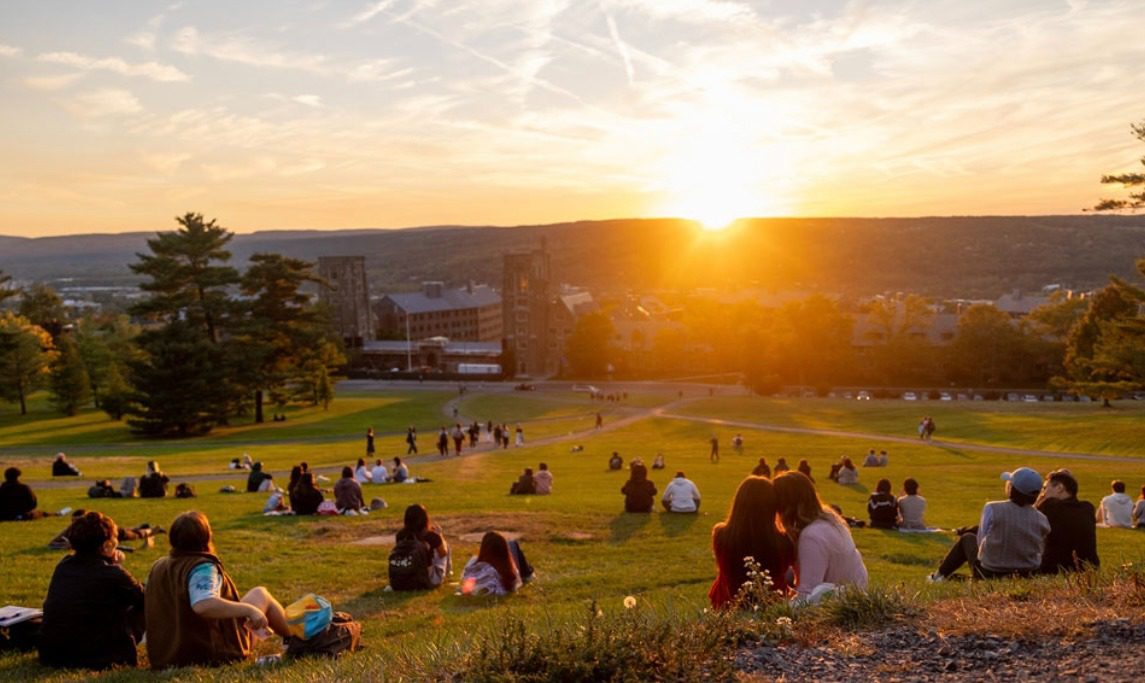
Life at Cornell is an endless adventure. The university creates an atmosphere where every day can be a discovery: a new friend, a new idea, a new song from McGraw Tower. Here, students don’t just gain knowledge—they create a community that they then carry out into the world.