

New York University is one of the most prestigious and globally recognized institutions of higher education. It has not only a powerful academic foundation but also a rich history worth exploring. Founded in 1831, it has transformed from a humble private college into a world-renowned research university with campuses and academic centers not just in New York but all over the globe. Read on for its founding story at newyork1.one.
Historical Origins
New York University’s historical roots trace back to the early 19th century. Specifically, it all began with Albert Gallatin, a former U.S. Secretary of the Treasury, who had an idea to create an institution that would provide higher education based on merit, not social class. At that time, there was immense inequality in New York’s education system. It was largely accessible only to the city’s elite, while children from working-class families and girls were excluded from this privilege for a long time. Furthermore, most American universities at the time were tied to religious denominations, but Albert Gallatin wanted to create a new kind of institution for the 19th century—one that would be non-religious and open to all. Ultimately, Albert Gallatin’s idea led to the establishment of the University of the City of New York in 1831, which later became what we know today as New York University.
The Development of the University
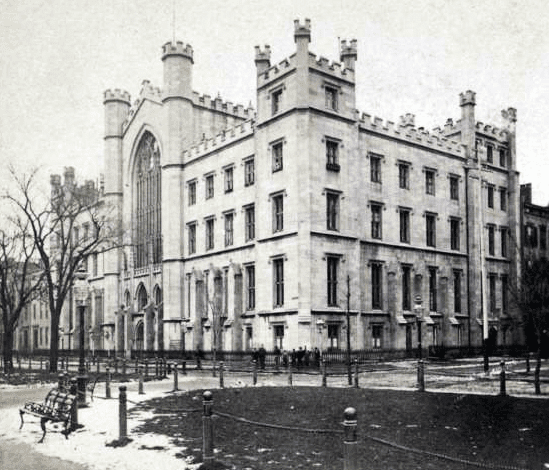
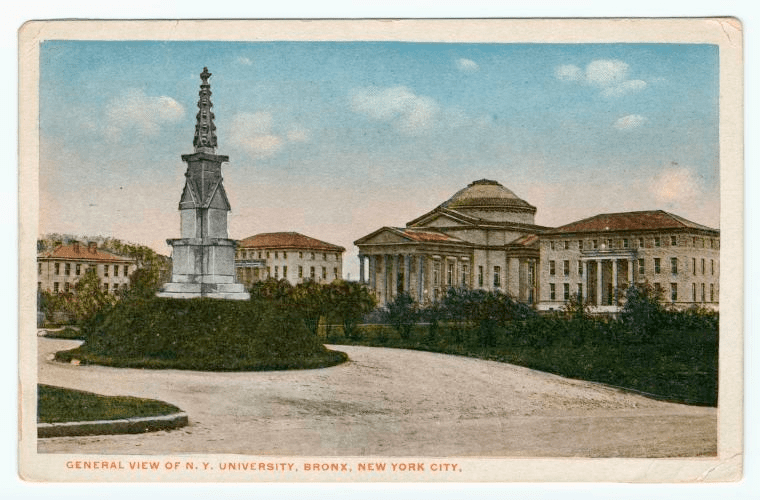
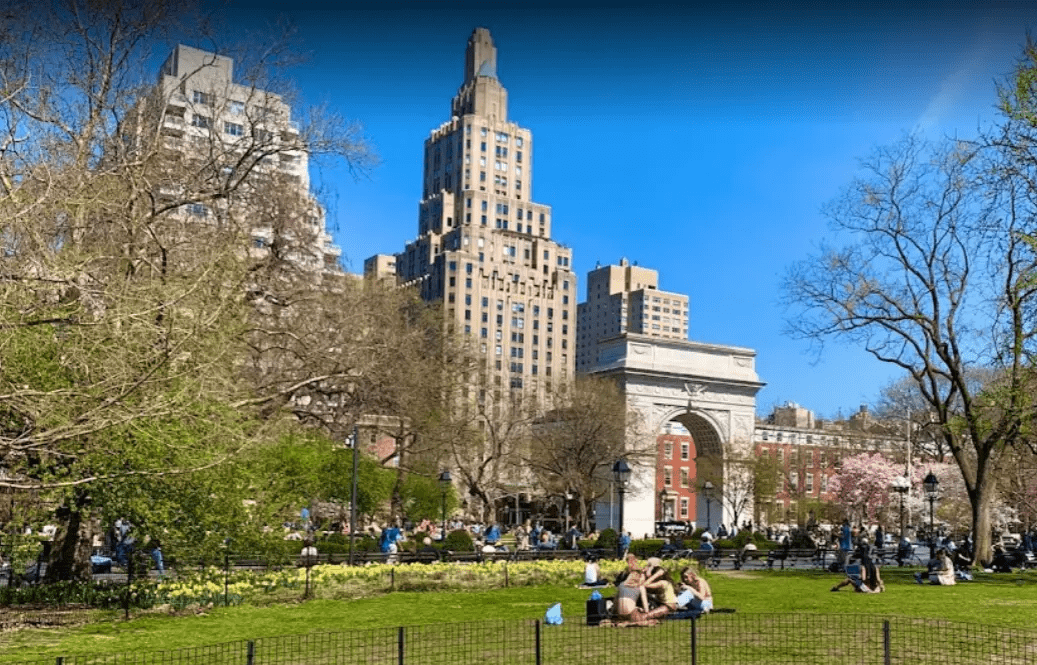
It’s worth noting that at the time of its founding, the university didn’t even have its own building. So when the first classes began in 1832, they were held in rented spaces near City Hall. But despite this lack of space, the university attracted many students and expanded quite rapidly. This eventually led to the purchase of its own property in Washington Square. This location would later become the main campus in Greenwich Village. The institution focused on a practical curriculum, emphasizing fields like civil engineering, architecture, commerce, and law, adapting to the economic and industrial growth of the rapidly expanding city. By the mid-19th century, New York University had established itself as a leading educational institution not just in the city but in the country. The NYU School of Law, the university’s first professional school, founded in 1835, became one of the most prestigious in the country. In 1841, the Medical School was founded, which later merged with Bellevue Hospital Medical College. It became a true center for medical education and research throughout the United States. As higher education evolved, New York University adapted, introducing new academic programs and expanding its research capabilities. In the late 19th and early 20th centuries, NYU’s influence grew significantly. In 1894, under Chancellor Henry Mitchell MacCracken, the university expanded to the Bronx, establishing the University Heights campus to accommodate the growing student body. The undergraduate college of arts and sciences and the School of Engineering were located there. NYU’s administrative offices were also moved to the new campus, while the university’s graduate schools remained in Washington Square. Although this campus thrived for many years, financial problems in the early 1970s led to its sale, and everything was once again moved back to the Washington Square building.
Modernization and Globalization

Throughout its existence, the university has consistently kept pace with changing trends, but the most significant global changes for the institution occurred in the second half of the 20th century. Notably, the Leonard N. Stern School of Business, the Tisch School of the Arts, and the Robert F. Wagner Graduate School of Public Service became leading institutions in their respective fields. The creation of the Courant Institute of Mathematical Sciences and the Silver School of Social Work further solidified NYU’s reputation as a leader in research and applied sciences. NYU’s commitment to globalization became evident in the early 21st century. In 2010, the university launched NYU Abu Dhabi, which offers a liberal arts education with a global perspective. This was followed by the establishment of NYU Shanghai in 2013, making NYU the first American university to have a degree-granting campus in China. Additionally, academic centers in cities like London, Paris, and Buenos Aires have allowed students to gain an international education while maintaining NYU’s rigorous academic standards.
Academic Opportunities
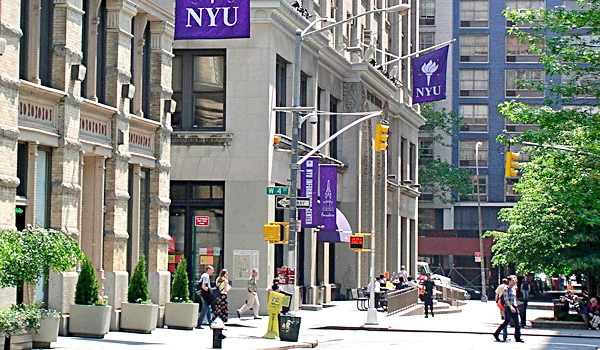
New York University consistently ranks among the top universities not just in the U.S. but worldwide. It is a leader in fields such as finance, law, medicine, performing arts, and social sciences. The Grossman School of Medicine is renowned for its groundbreaking research and free medical education program. The Tisch School of the Arts has produced some of the most famous NYU alumni in the world, including actors, directors, and artists. Meanwhile, the Stern School of Business continues to be a hub for aspiring entrepreneurs and businesspeople. In addition to its strong academic programs, NYU remains at the forefront of innovation. The university’s investments in artificial intelligence, data science, and cybersecurity position it as a leader in advanced research. NYU’s faculty and alumni include Nobel Prize winners, Pulitzer Prize recipients, and world leaders in every conceivable field. Beyond its academic activities, NYU plays a vital role in shaping public policy, cultural discourse, and economic development. As a metropolitan university deeply integrated into the fabric of New York, it has contributed to the development of public health, urban planning, and social justice. The Brennan Center for Justice at its School of Law has been instrumental in addressing issues related to democracy, criminal justice reform, and voting rights.
Getting Accepted to New York University
While in its first decades the university accepted all capable students, in the 21st century, its status as one of the world’s most prestigious universities has made admission very selective. In the 2020s, about 8% of the more than 118,000 applicants are admitted to NYU’s freshman undergraduate class. The university’s three undergraduate colleges admit less than 5% of their applicants. And in 2021, NYU became the first private university in the U.S. to surpass 100,000 applications. This means the acceptance rate at New York University is very low due to immense competition. The incoming class of 6,500 students represents 102 countries, all 50 U.S. states, and the District of Columbia. Most freshmen have an unweighted GPA of 3.7/A (90-95%) and are in the top 10% of their high school graduating class. The average SAT score is 1540 out of 1600 (99th percentile). The student-to-faculty ratio on the New York campus is 9:1, and even lower at the Abu Dhabi and Shanghai campuses. The average scholarship for freshmen exceeds $35,000, and 20% of students receive Pell Grants. In 2016, the acceptance rate for NYU’s graduate schools varied: 1.8% to the School of Medicine, 23% to the Business School, 28% to the School of Engineering, 29% to the Graduate School of Arts and Science, and 34% to the School of Law.
Sources:
- https://www.nyu.edu/faculty/governance-policies-and-procedures/faculty-handbook/the-university/history-and-traditions-of-new-york-university/a-brief-history-of-new-york-university.html
- https://www.britannica.com/topic/New-York-University
- https://www.nyuuniversityheights.com/
- https://www.nyu.edu/about/news-publications/history-of-nyu.html