

Education plays a crucial role in a person’s life, as it builds expertise in a chosen profession, instills self-confidence, and boosts self-esteem. Your own life is a testament to this. Just think about how gaining new knowledge and professional skills broadens your horizons, develops your logical thinking, and helps you form firm life principles and important human values. Read more at newyork1.one.
These essential positive personal qualities open up opportunities for a good and, more importantly, interesting job with a high salary. They also allow you to unlock your full potential, find fulfillment in various fields, and enjoy life and your work while easily achieving your goals.
Education truly opens up countless doors and expands our horizons.
Whenever education and learning come up, few people stop to think about how this “craft” first emerged. In this article, we’ll explore the history of education in the city that never sleeps.
When Did Education Emerge in New York?
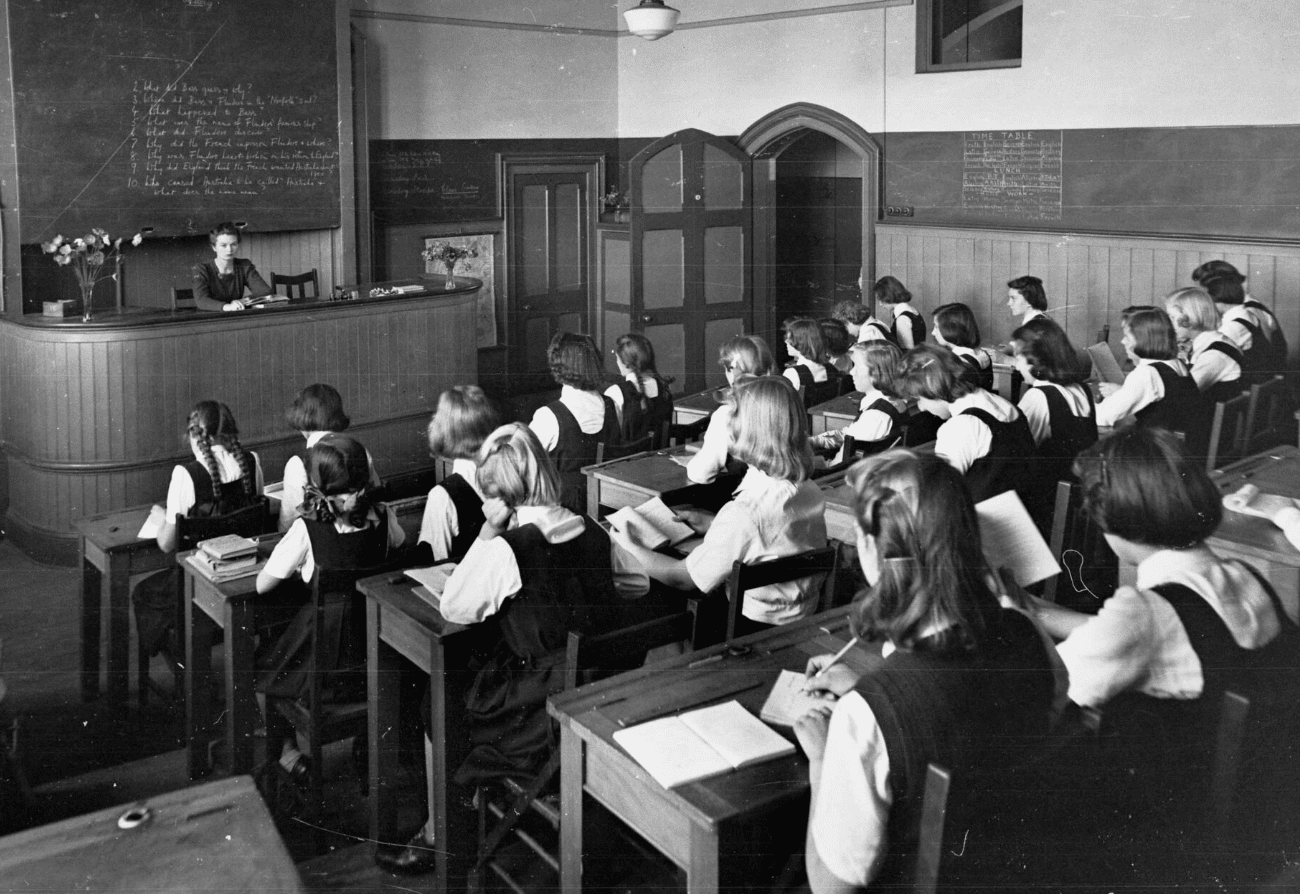
The history of education in New York doesn’t have a single, precise date of origin. Wherever people lived, they taught themselves and their children. The process and content of education have evolved over time. Interestingly, schools used to handle only a fraction of the educational tasks. Historically, newspapers, libraries, and churches were key sources of enlightenment, and families, in particular, passed on knowledge, skills, and perspectives to the next generations. The development of schools and the education of the youth here in New York have long been considered important civic duties. In 1792, the state’s first governor, George Clinton, urged the state to “promote and encourage learning.” He explained that it was a special duty of the government of a free state, where the highest offices are open to citizens of all ranks, to spread the level of education necessary for the populace by establishing schools and seminaries. According to historical data, the first public school in the state was founded in 1791. Later, some state support was provided to primary schools in 1795, and a permanent system of public schools was created in 1812. Until 1867, tuition fees paid by parents provided part of the funding, until all primary schools became free. In 1850, public high schools were established in New York, and they later spread throughout the state during the second half of the century. In 1805, the state legislature established the Free School Society, organized by philanthropists to educate poor children. By 1826, it was renamed the Public School Society and managed eight schools with 345 students, with separate departments for boys and girls. The schools taught reading, writing, arithmetic, and religion. Even though the Public School Society was a private organization, it dominated the “educational arena.” In 1847, wealthy businessman and President of the Board of Education, Townsend Harris, founded the “Free Academy of the City of New York,” which was the first public high school in New York City. There was no tuition fee. The academy’s goal was to provide access to a good education.
A Progressive Stage in New York Education
By 1930, nearly all New Yorkers were attending college, and 22% had a higher education. Immigration from Eastern Europe increased dramatically after 1880, as did the number of Jews, Italians, and others. Elementary school enrollment grew from 250,000 in 1881 (including Brooklyn) to 494,000 in 1899 and 792,000 in 1914, when immigration came to a halt. While the number of schools remained stable at about 500, the number of teachers doubled from 9,300 in 1899 to 20,000 in 1914. High school enrollment grew from 14,000 in 1899 to 68,000 in 1914. One of the immigrants from Germany in 1857 was Felix Adler. Adler returned to Germany to earn a Ph.D. at Heidelberg University at a time when only Harvard had a Ph.D. program. He worked as a professor of philosophy at Columbia University from 1902-1933. His Society for Ethical Culture promoted numerous educational reforms in the city. Adler even founded a high school for gifted youth and a teachers’ college. Adler was a national leader in the fight against child labor and organized advanced studies for children. Hunter College was founded in 1870 as a women’s normal and high school to prepare young women as teachers in primary schools. In 1884, the Industrial Education Association was founded.
Interesting Facts About New York Education:
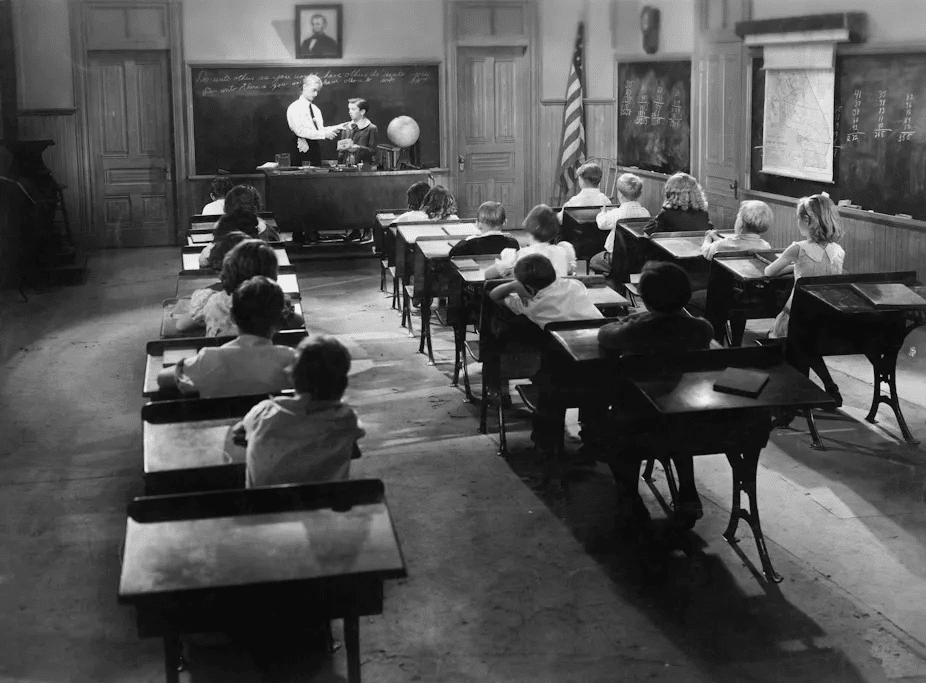
- There is no city-wide September 1st holiday in New York that would be an equivalent to Knowledge Day in Europe. As a matter of fact, the start and end dates for the school year in New York are determined by individual school districts. Interestingly, there is no single, city-wide school curriculum; each school tailors its program to the interests of its students. However, nationwide tests do exist, and it’s impossible to get a certificate or diploma without them.
- In New York, just like in any American city, people don’t choose a school closer to their home, they choose a home closer to their school. This is all for the comfort of students and parents. It’s no secret that many New York schools only admit children based on their place of residence. It’s not a coincidence that the quality of the local school is one of the main price-determining factors in the U.S. residential real estate market.
- In general, the American education model is based on the “Liberal Arts” principle, where students and parents can choose subjects that align with their interests. Consequently, in New York high schools, students can choose only those courses that will be useful to them when applying to a specific university major.
Sources used: