

For over 170 years, Steinway & Sons has been considered the benchmark of piano artistry. Nearly every major concert hall in the world has at least one Steinway—from Carnegie Hall to small chamber venues. Craftsmanship, patience, and passion make these instruments more than just pianos—they are living embodiments of sound that changes the history of music. Read on newyork1.one for more about the history and development of this global music brand.
An Empire of Sound Born from One Master’s Dream
In the 1820s, German craftsman Heinrich Engelhard Steinweg built his first piano in a small room in Seesen. His instruments, under the Steinweg brand, quickly gained fame. In 1850, the master and his family emigrated to the U.S., seeking new opportunities.
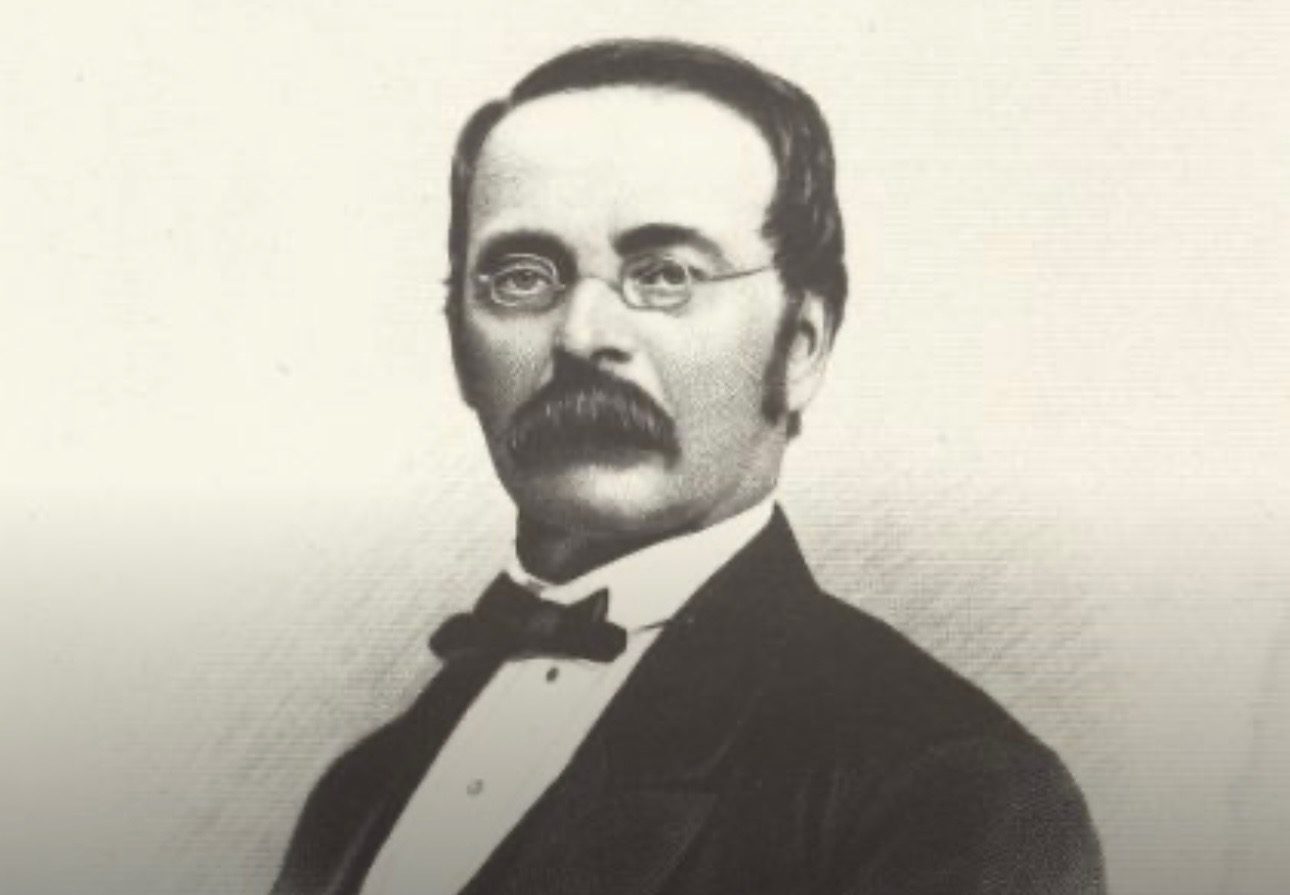
One of his sons, Theodore, remained in Germany, partnering with master Friedrich Grotrian.
In New York, Steinweg opened a small workshop on Varick Street. It was there, in 1853, that the Steinway & Sons brand was born. The first American piano cost $500 and marked the beginning of a new era. Demand grew so rapidly that the factory soon occupied an entire block on Park Avenue. By the 1860s, the company had 350 employees, introduced innovations, and won dozens of international awards.
After his brothers’ deaths, Theodore moved to New York, sold the German factory to Grotrian (thus creating Grotrian-Steinweg), and generated over one-third of all Steinway patents. In the 1870s, the industrial community of Steinway Village was created in Queens—complete with a factory, housing, a school, a library, and even a fire station.
The company also grew culturally. In 1866, Steinway Hall opened—a concert venue that became the heart of New York’s musical life. To reach Europe, a second factory was established in Hamburg in 1880.
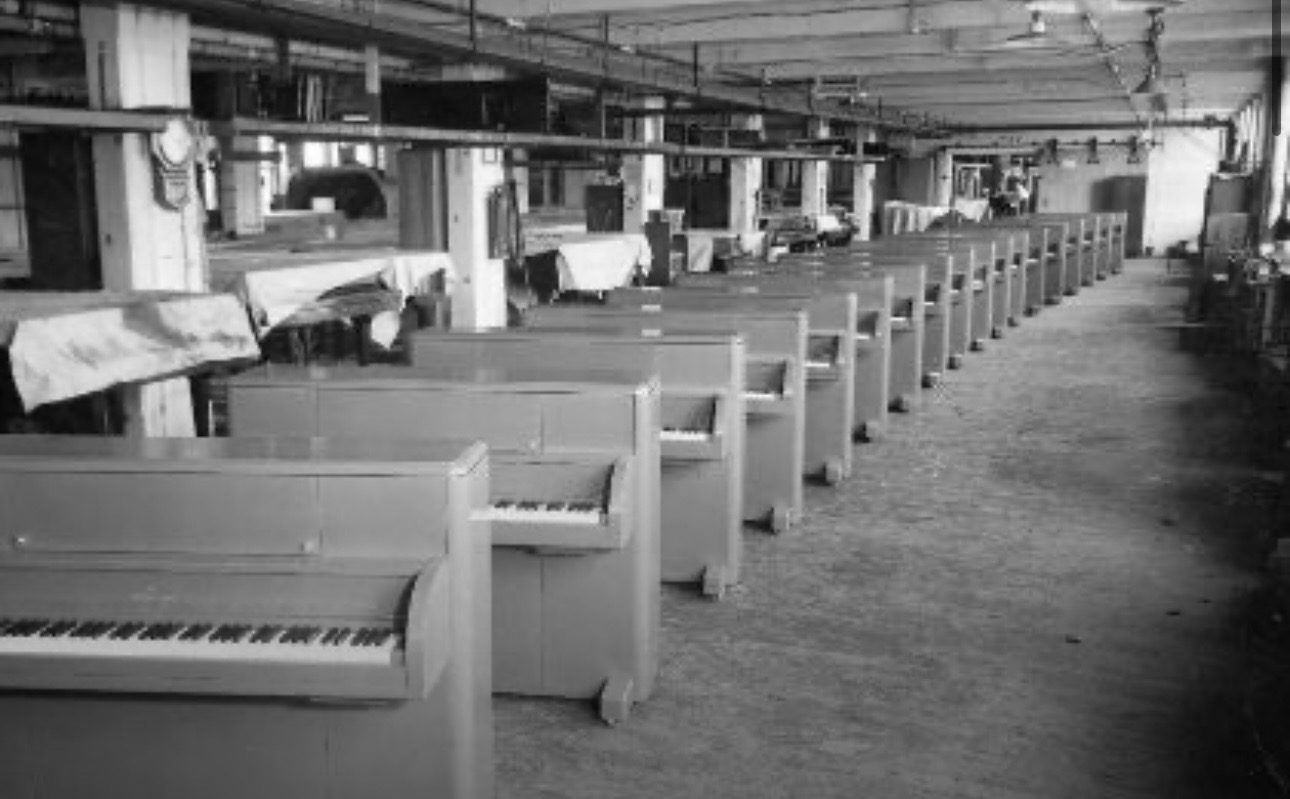
Despite strikes and difficulties in the 1880s, Steinway received royal warrants, and Franz Liszt called the brand’s grand pianos “masterpieces of power and harmony.” During World War II, the company manufactured field pianos for soldiers, and the Hamburg factory was rebuilt under the Marshall Plan after being bombed. After the financial crises of the 1970s, Steinway changed ownership several times but maintained its reputation as a symbol of perfection.

Steinway & Sons has its headquarters on Sixth Avenue in New York and two historic factories—in New York and Hamburg. In every instrument lies the living legacy of a master’s dream, which still sounds flawless today.
Inside the Steinway & Sons Factory
Everything begins with wood. Only the finest wood is selected for the Steinway factory—hard rock maple, mahogany, and spruce. After delivery, the materials undergo natural seasoning for two years, allowing moisture to evaporate gradually, thus preserving acoustic purity and durability. Overly rapid drying can destroy the structure, which is why the technology hasn’t changed for over 160 years.
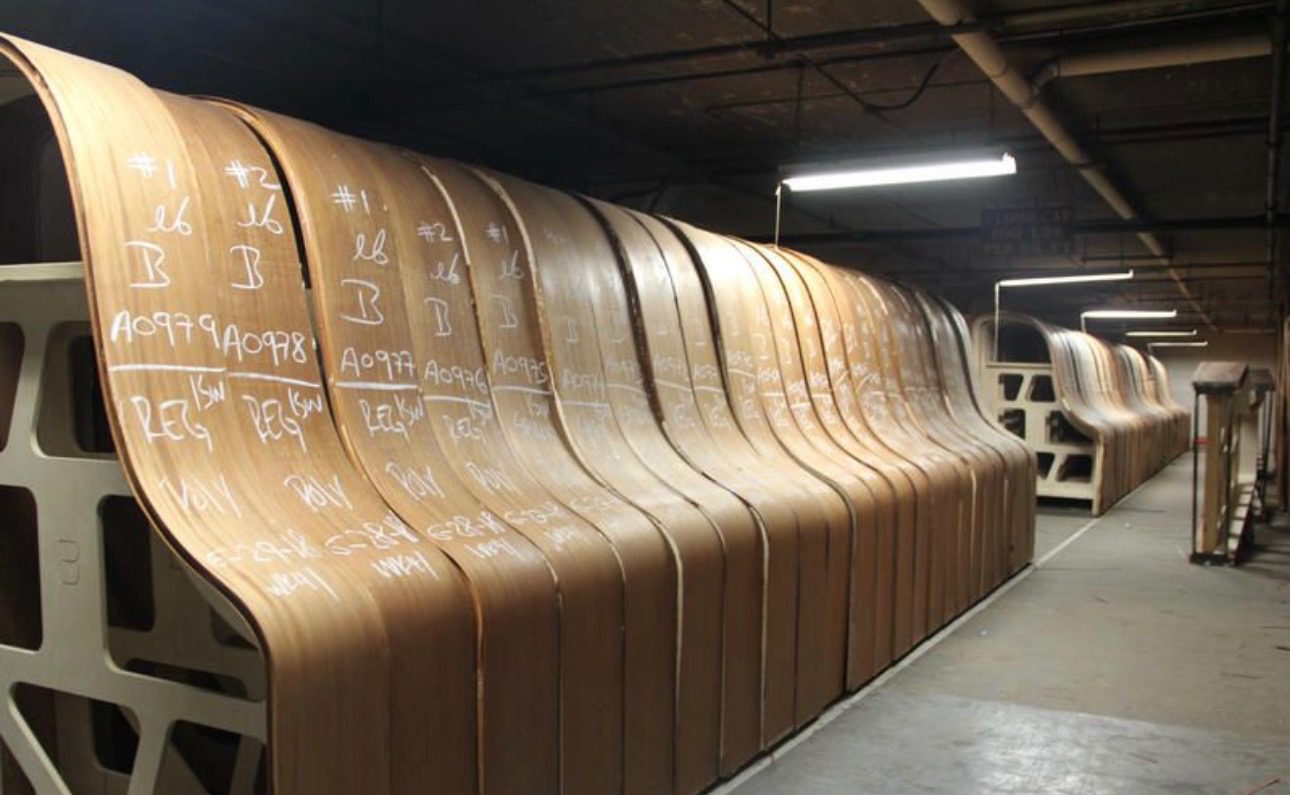
Once the wood is ready, the process of rim bending begins, which defines the grand piano’s classic curved shape. According to a Theodore patent from 1880, up to seventeen layers of rock maple are bent into a continuous, smooth line, creating a case that transmits vibrations evenly. The rim is then dried again for several months to ensure the shape is permanently set.
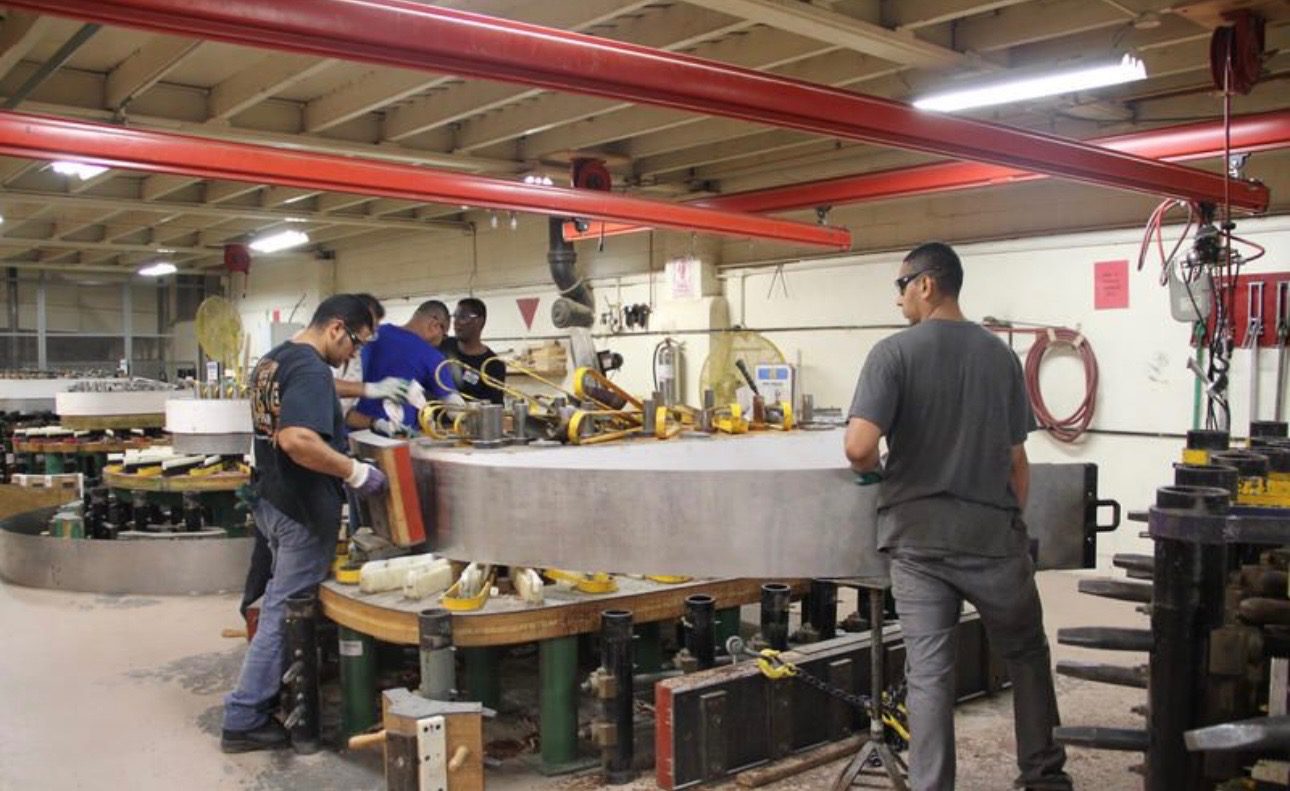
On the fourth floor of the factory, in the department called “The Belly Department,” the heart of the instrument—the soundboard and the bridge—is created. This is where the energy of the strings transforms into sound. Craftsmen manually install hundreds of small tuning pins that guide the strings, ensuring a clean transfer of vibrations. Since string tension can reach up to 40,000 pounds (over 18 tons), the precision of every component is crucial.
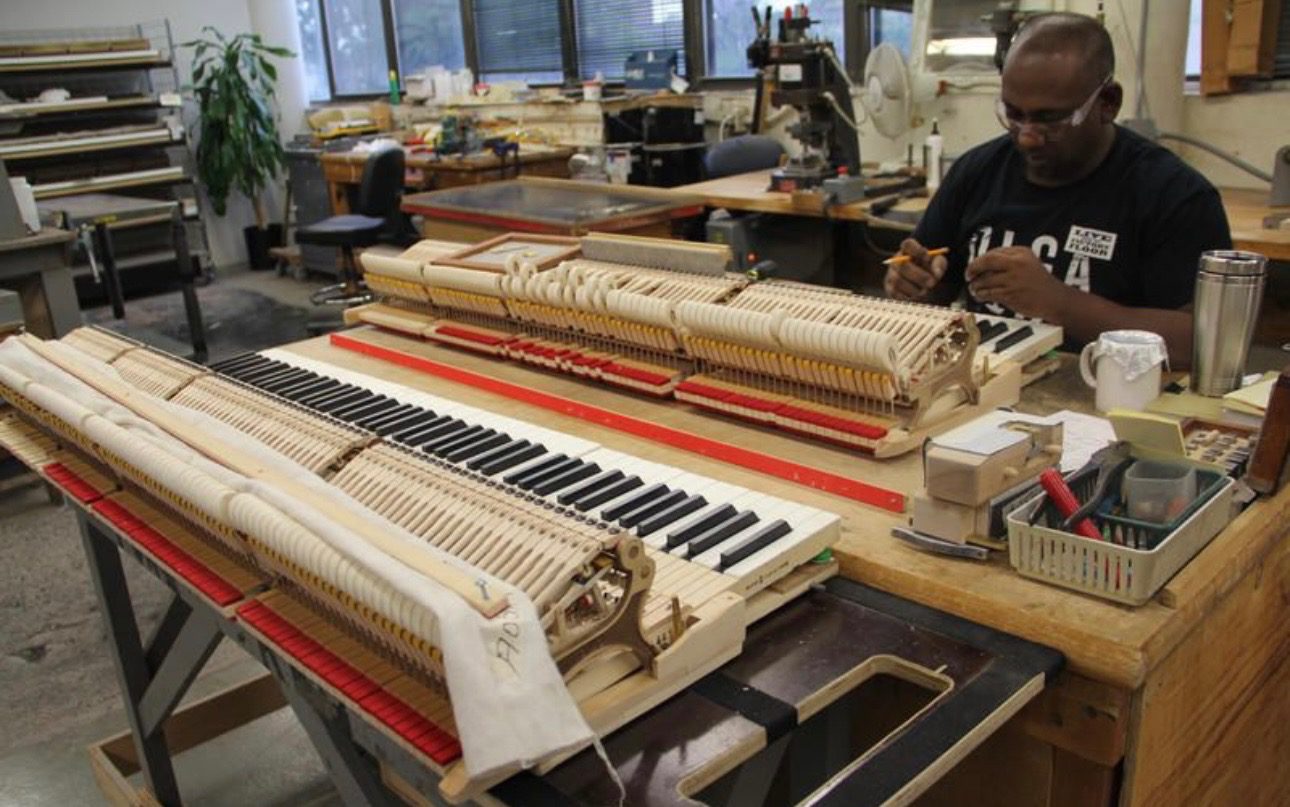
During the regulation process, every key is individually weighted so that it returns to its original position at a perfect speed. The balance in the action mechanism is meticulously calibrated, as the slightest difference in weight changes the feel of the key.
The hammers are made of pure wool; their softness is tuned with an open flame to achieve the precise timbre. The piano then undergoes testing in the so-called “Pounding Room,” where every key is struck over 3,000 times before the instrument goes for its final tuning.
Every Steinway grand piano consists of more than 12,000 parts, most of which are handcrafted.
The exterior finishing of a Steinway is no less impressive than its interior. Every case receives six coats of lacquer, between which a precise time interval is maintained. After painting, the instrument “rests” for a week while the finish hardens. The surface is then repeatedly sanded and polished to a perfect sheen.
Speed is not the pursuit here. The goal is not mass production, but slow perfection.
The World of Steinway: From Compact Grands to Concert Grandeur
Steinway offers a variety of models for every need, from compact pianos for apartments to full-sized concert grand pianos. The size of the model determines its power and sound: the larger the grand piano, the deeper and richer the sound. In addition to new instruments, Steinway sells Certified Pre-Owned pianos, restored to company standards, making them valuable for both musicians and collectors.
The most common models:
- Model S (5’1”)—ideal for apartments and small rooms. Despite its small size, the grand piano has a rich sound due to its specialized diaphragmatic soundboard.
- Model M (5’7”)—a versatile model, perfect for medium-sized rooms, studios, and small performance venues. The balance between size and power makes it a popular choice among professional and amateur pianists.
- Model O (5’10.75”)—brought back into production in 2005 to meet the modern demand for a versatile medium size with a powerful sound.
- Model A (6’2”) and A-3 (6’4.5”)—ideal for salons, studios, and chamber concerts. The A-3 model is valued by collectors for its rarity and unique sound.
- Model B (6’11”)—the classic grand piano, popular in educational institutions and among professional musicians.
- Model C (7’5”)—combines voluminous sound with convenient size for large halls and conservatories.
- Model D (8’11”)—the concert grand, the most powerful Steinway, chosen by world-class performers for concert halls.
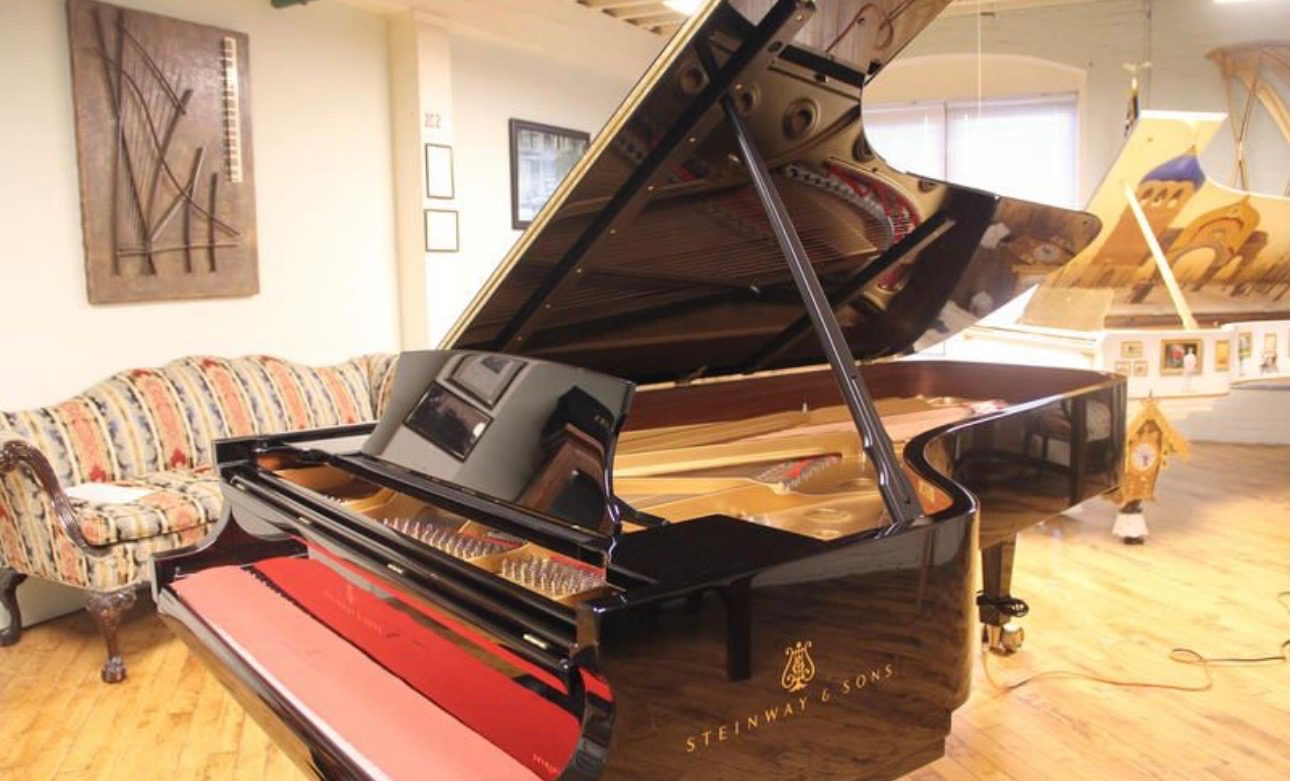
Steinway previously manufactured vertical pianos of various sizes, allowing an instrument to be selected even for very compact spaces. Now, only one model is produced in New York (K-52) and one in Hamburg (K-132).
Steinway is renowned not only for its sound but also for its sophisticated design. Since 1857, the company has created Art Case pianos with unique cabinets adorned with inlays, carvings, and artwork. Among the most famous are the Alma-Tadema grand piano (1887), the 100,000th and 300,000th Steinway pianos, and the “Sound of Harmony” (2008).
Designers and artists, from Karl Lagerfeld to Louis Comfort Tiffany, have created limited series of instruments, combining Steinway’s craftsmanship with global art. The Steinway Crown Jewel Collection, introduced in 1993, embodies this approach—instead of classic black finishes, rare woods from around the world are used, creating true masterpieces for collectors.
Interesting Facts About Steinway
- Every major Steinway achievement was accompanied by a special instrument: the 100,000th piano was given to the White House, and the 300,000th was received by President Roosevelt. In 2015, Frank Pollaro created the 600,000th piano, the “Fibonacci,” made of natural Macassar ebony.
- The entire process is done by hand, from rim bending to the pairing of the action with the keys. One grand piano takes up to 11 months to complete.
- Modern innovations, like the Spirio, allow the piano to play itself via Bluetooth. It reproduces the recordings of over 1,700 artists, imitating their style, including historical performances.
- There are over 1,600 Steinway Artists worldwide, about 800 in the U.S. They receive no fees for using the piano and are not given an instrument for personal use—the choice to play a Steinway is always voluntary.
- All rims are bent in Steinway’s own presses and conditioned for 10–16 weeks at 85°F and 45% humidity.
- Over 90% of the instruments have an Ebony (black) finish.
- Steinway never sells its soundboards to anyone, not even dealers.
- The Juilliard School owns 260 Steinway pianos.
- One of the most expensive Steinway grand pianos was built in Hamburg in 2008 for 1.2 million Euros—the “Sound of Harmony.” It is adorned with 40 types of wood and artistic inlays. However, at least two other Steinway grand pianos have since surpassed it in value: the “Fibonacci” model and the “Pictures at an Exhibition” model from 2017—each is estimated to be approximately twice as expensive as the “Sound of Harmony.”