

From the ambitious dream of John Jacob Astor IV to contemporary designer suites and a global brand, the St. Regis has charted a course spanning over a century of development, change, and transformation. It has weathered economic booms and crises, changes in ownership, and massive renovations, all while retaining its most crucial element—its unique aura of elegance and status. Read on newyork1.one for more about this premium New York hotel.
Creating a New York Legend on Fifth Avenue
Fifth Avenue between 42nd and 59th Streets remained relatively undeveloped for a long time until, at the turn of the 20th century, it rapidly began transforming into the commercial heart of the city. In 1891, the Duchess of Marlborough sold a lot on the corner of Fifth and 55th to William Backhouse Astor Jr., and after his death, the land passed to John Jacob Astor IV—the heir to the family of hoteliers.
Astor initially dreamt of building a lavish home, but the commercial spirit of the block prompted him toward a different idea—to build a hotel. The name St. Regis was inspired by Lake Regis in the Adirondacks. Construction, which began in late 1900, faced hurdles: disputes with neighbors, strikes, lawsuits over the basements, and an alcohol license. By moving the entrance to 55th Street, architects circumvented a ban on alcohol sales near a church and finally received his permit.
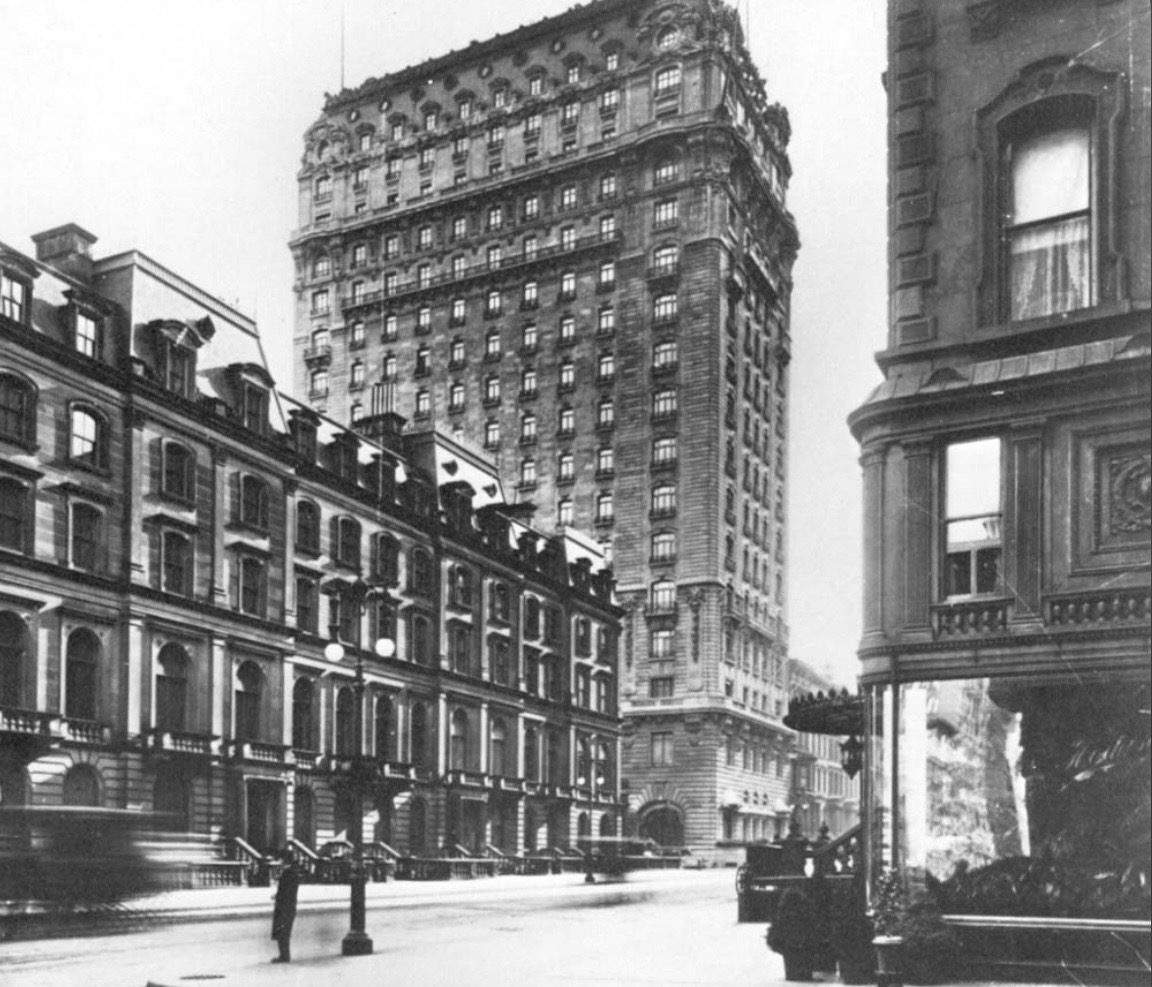
Upon opening on September 4, 1904, the St. Regis immediately became synonymous with luxury. Rooms cost between $4 and $125, and the restaurants were compared to the finest in New York. Despite attempts by neighbors, including the Rockefellers, to curb expansion, the Astors built additions, established shops, a rooftop garden, and new suites.
After Astor IV’s death on the Titanic in 1912, the hotel passed to his son, Vincent. In the 1920s, the St. Regis underwent a wave of modernizations: new wings, restaurants, and a terrace. It was the hotel’s bartender, Fernand Petiot, who created the legendary cocktail, the Bloody Mary. After the war, the rooftop garden and the La Boite club remained a magnet for high-society life.
Following Vincent’s death in 1959, the St. Regis was resold several times. In the 1960s and 1970s, the hotel updated its interiors and restaurants and restored the ballroom. In the 1980s and 1990s, it underwent its most extensive renovation: rooms were expanded, marble floors were restored, the Tiffany & Co.Suite was created. In 1992, the St. Regis became the flagship of the ITT Sheraton Luxury Collection, and after the Starwood purchase in 1997, it became the heart of the new St. Regis brand, cementing its reputation as the embodiment of elegance on Fifth Avenue.
The St. Regis New York in the 21st Century
In the early 2000s, the average St. Regis guest was about 50 years old, primarily American. The hotel was renowned for its personalized service, particularly the butler service, which attracted loyal clientele. At the time, the hotel employed about 600 staff—more than the number of guests per night.
Soon, some rooms were converted into condominiums and offered for seasonal or full ownership. By 2006, renovated residences opened on the upper floors.
In the early 2010s, the St. Regis added two signature designer suites—the Dior Suite and the Bentley Suite—and underwent a major $90 million renovation in 2013. All guest rooms and public spaces were refreshed, and a new restaurant and gym were added. Following these updates, the hotel became appealing to younger and more international guests, with the average age dropping to 45.
During the COVID-19 pandemic, the hotel temporarily closed and was used to house patients who did not require intensive care.
In 2023, the Chevalier Suite, inspired by 18th-century Paris and the film of the same name, was unveiled.
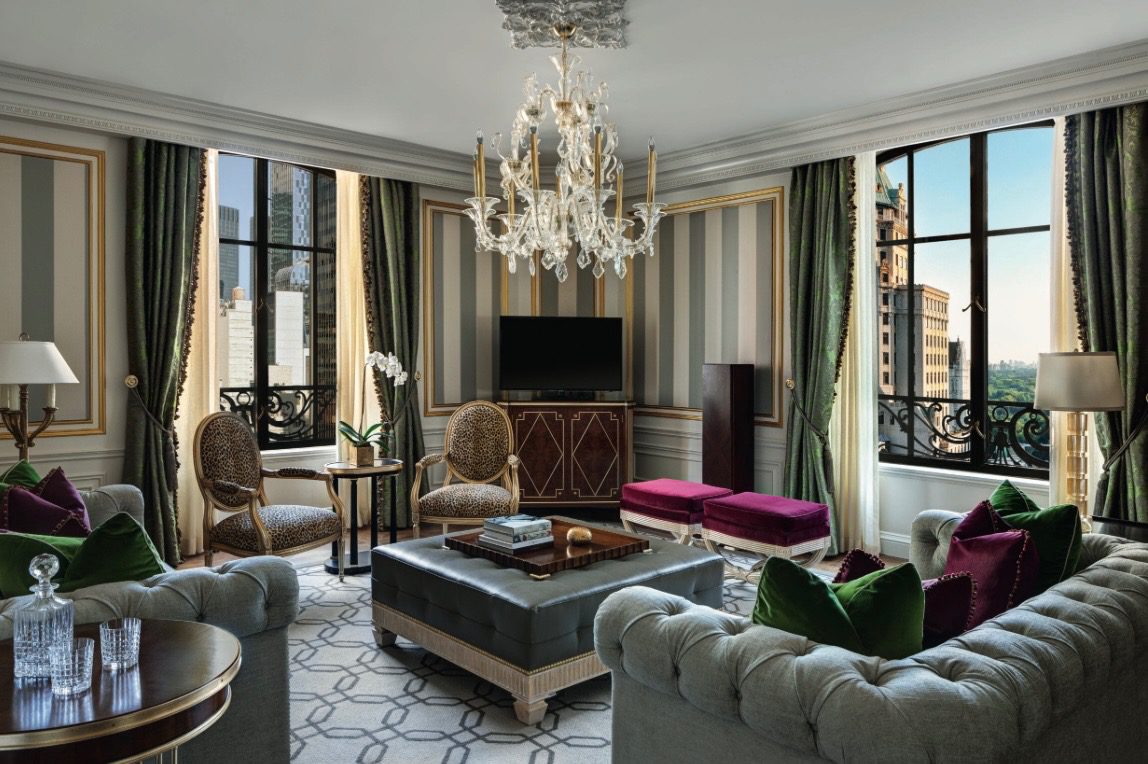
In 2024, the St. Regis celebrated its 120th anniversary with a major redesign of its public spaces: the lobby, the King Cole Bar, and two restaurants were updated, restoring elegance and a luxurious atmosphere but with a contemporary design by Champalimaud Design.
The St. Regis New York remains a favorite hotel for international travelers and New Yorkers, continuing its traditions of elegance, personalized service, and cultural significance.
Architecture and Design
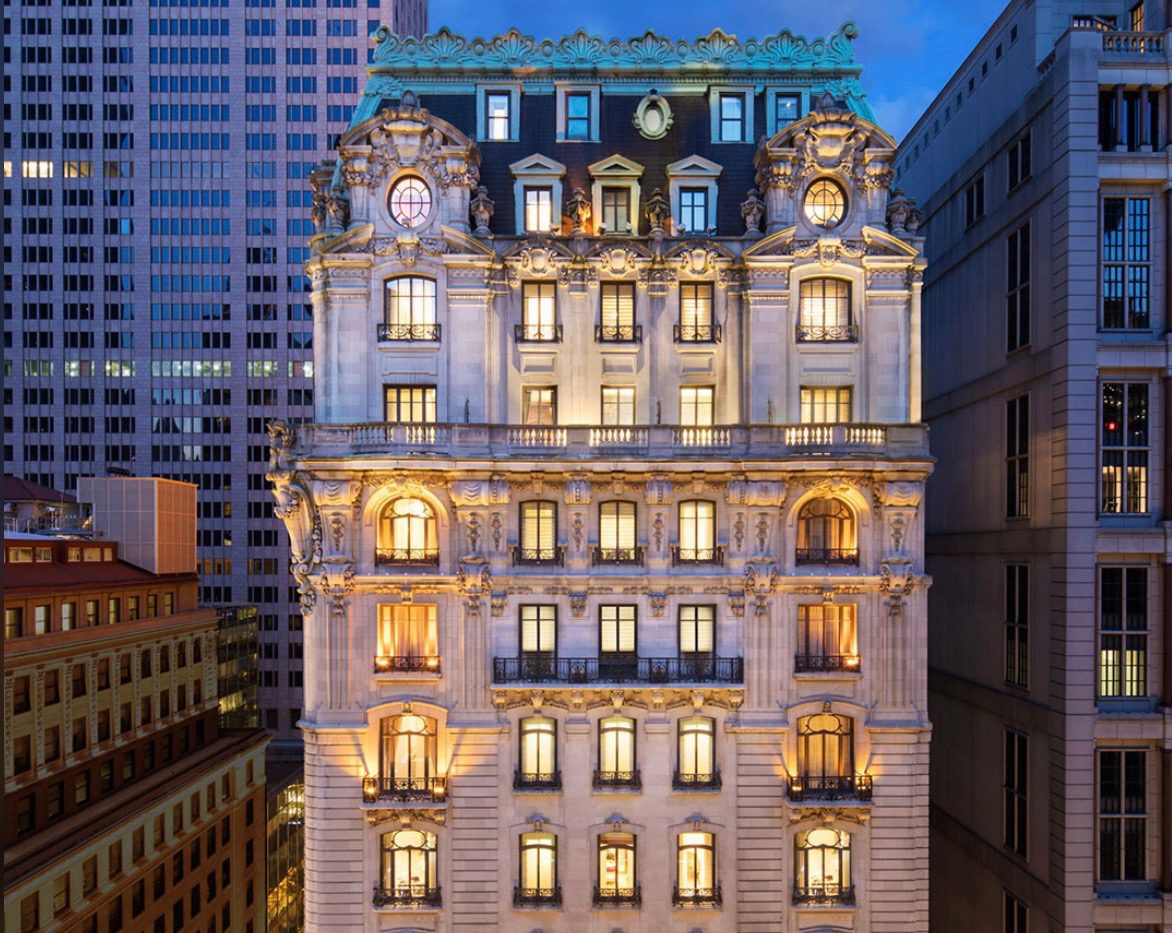
The St. Regis New York is an 18-story hotel built in the Beaux-Arts style. The limestone façade is divided into three horizontal sections, resembling a column: base, shaft, and capital. Nature-inspired ornamentation is concentrated in select areas. The upper floors are adorned with pilasters, balconies, a slate and copper mansard roof, and the 55th Street annex repeats the original style, though without the lavish decorative details.
The building is equipped with complex mechanics: a heating and ventilation system with air treatment across three basement levels, electrical and pneumatic systems, Otis elevators, an electric synchronized clock system, kitchens with marble countertops, and modern refrigeration units. The steel frame with massive beams allowed for column-free spaces, while concrete and steel provided fire protection.
Inside the St. Regis, a soft glow of marble and bronze prevails. Fire-resistant wood adds a sense of solidity and tranquility to the interiors, and the oak paneling in the public rooms evokes the atmosphere of an old-world residence.
The hotel’s ground floor serves as a prologue to its history. The lobby greets guests with formal silence. The 350-seat restaurant operates at its own pace—a blend of voices, aromatic dishes, and soft shadows from the wall sconces. Nearby, in the cozy café, time slows down, allowing guests to savor their thoughts. But the true heart of the floor is the Palm Court. Its Persian tapestries and Robert Sewell frescoes create a fantasy where Eastern patterns intertwine with European refinement. Adjacent is the legendary King Cole Bar, featuring Maxfield Parrish’s masterpiece.
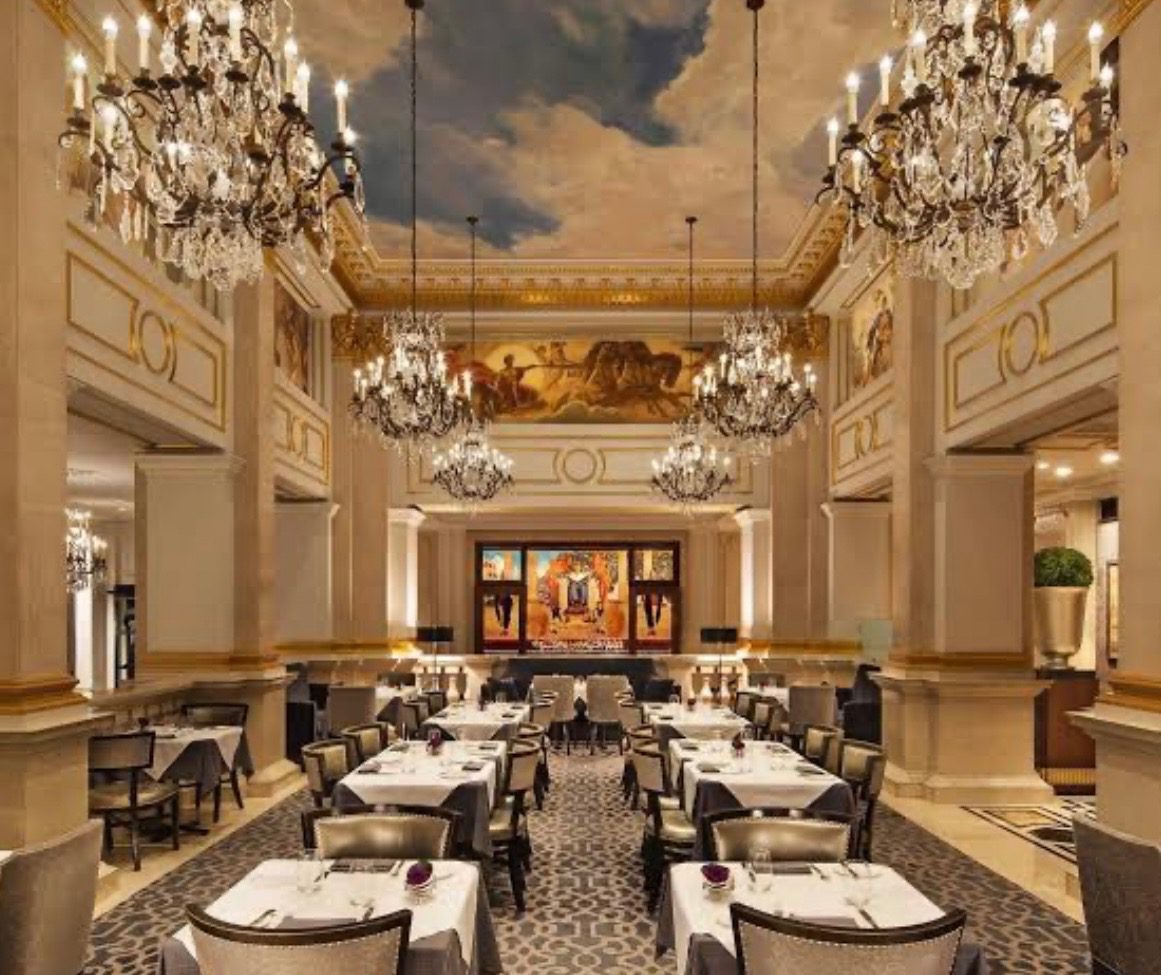
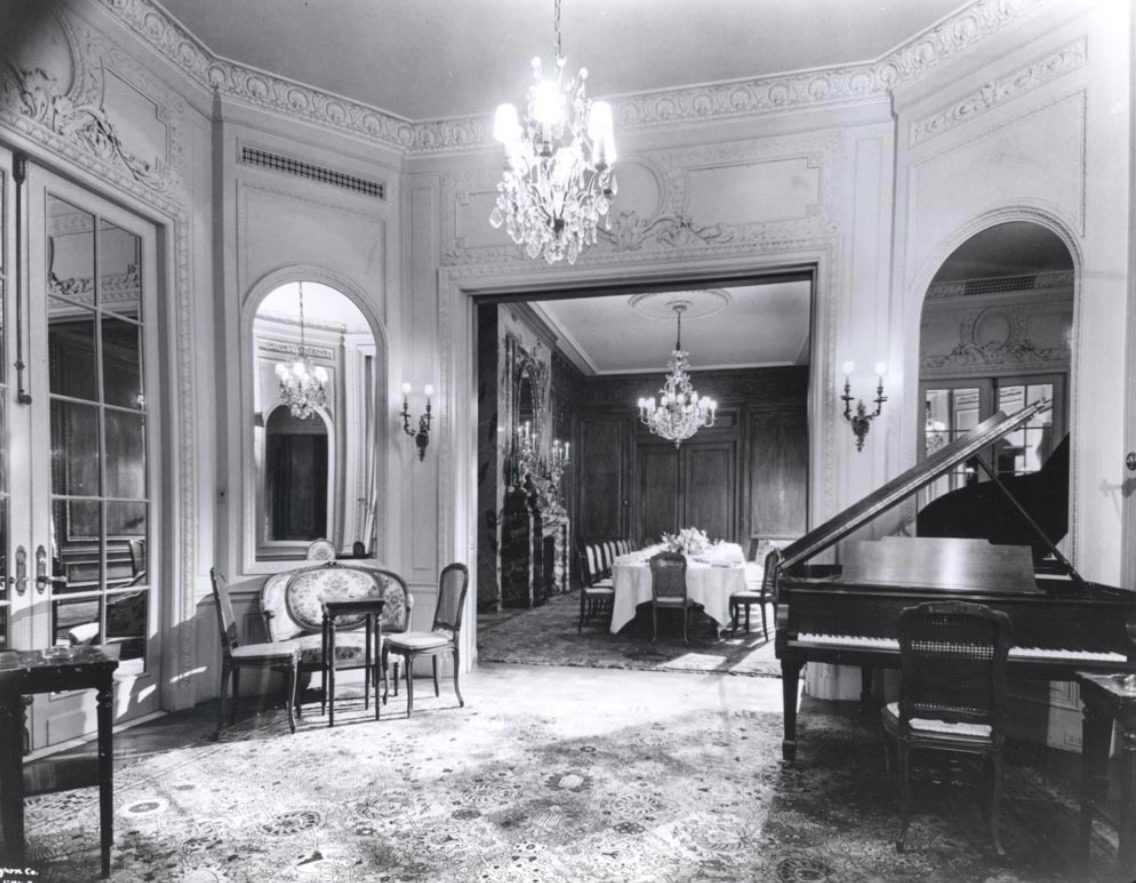
The second floor opens into opulent reception spaces—the banquet and ballroom shimmer with the golden reflection of chandeliers. Further along is the quiet library with over two thousand books, where the air smells of paper and serenity. The adjacent reception rooms and private dining rooms complete the picture. They offer a sense of intimacy and luxury, creating an ideal setting for private meetings.
The hotel originally had 350 rooms, mostly three-room suites with full bathrooms, fireplaces, and closets. Following the 1990s renovation, approximately 360 rooms with an average area of 452 sq. ft. (42 m²)remained, with some floors converted into condominiums.
Famous Guests
From the very beginning, the St. Regis was the center of New York’s social scene. Early events included a 1904 banquet for Japanese Prince Fushimi Sadanaru and a dinner honoring President Theodore Roosevelt’s niece, Corinne Robinson.
The King Cole Room became a meeting place for literary and creative figures such as Michael Arlen, Lucius Beebe, John McClain, and Quentin Reynolds. In the 1960s, the hotel was regularly visited by film and theatre personalities: Marlene Dietrich, Mary Martin, Joan Fontaine, Rex Harrison, Alfred Hitchcock, and Marilyn Monroe.
The hotel has also hosted royalty and heads of state: King Leopold III of Belgium and his wife Lilian, Italian Countess Marina Cicogna, and former Swiss President Max Petitpierre. Regular long-term residents included mining magnate Daniel Guggenheim, inventor Nikola Tesla, television executive William Paley and his wife, and artist Salvador Dalí and his wife. John Lennon recorded the demo for “Happy Xmas (War Is Over)” in his suite here.
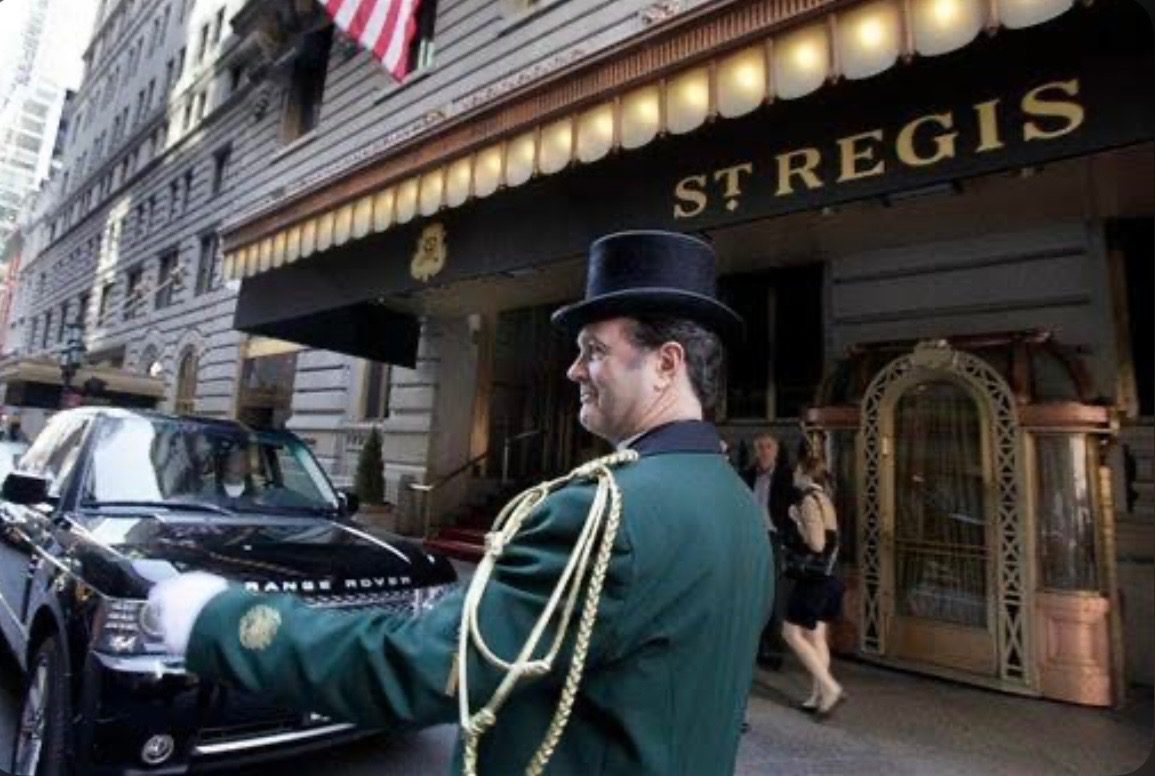
The St. Regis New York remains a beacon of classic style on Fifth Avenue, blending historical heritage with contemporary design and technology. Its famous butler service, the legendary King Cole Bar, meticulously restored interiors, and new cultural traditions uphold the spirit laid down by the Astors back in 1904.